Steam Next Fest is drowning in demos
Steam Next Fest is underway, with 7,280 game demos available. That’s up from 4,382 in June, just four months ago.
Next Fest exists so developers can find their audience, reach out and build a fanbase that will put their game on the wishlist. How are they supposed to stand out from 7,279 others?
Most of you know Steam, the market-leading store for games and apps on PC, run by Valve and known for its huge catalogue, liberal stance on content and sales.
Next Fest is a week of free demos, running until October 26 at 10 AM Pacific (6 PM CET). The whole festival is built around one mechanic: getting players to wishlist your game.
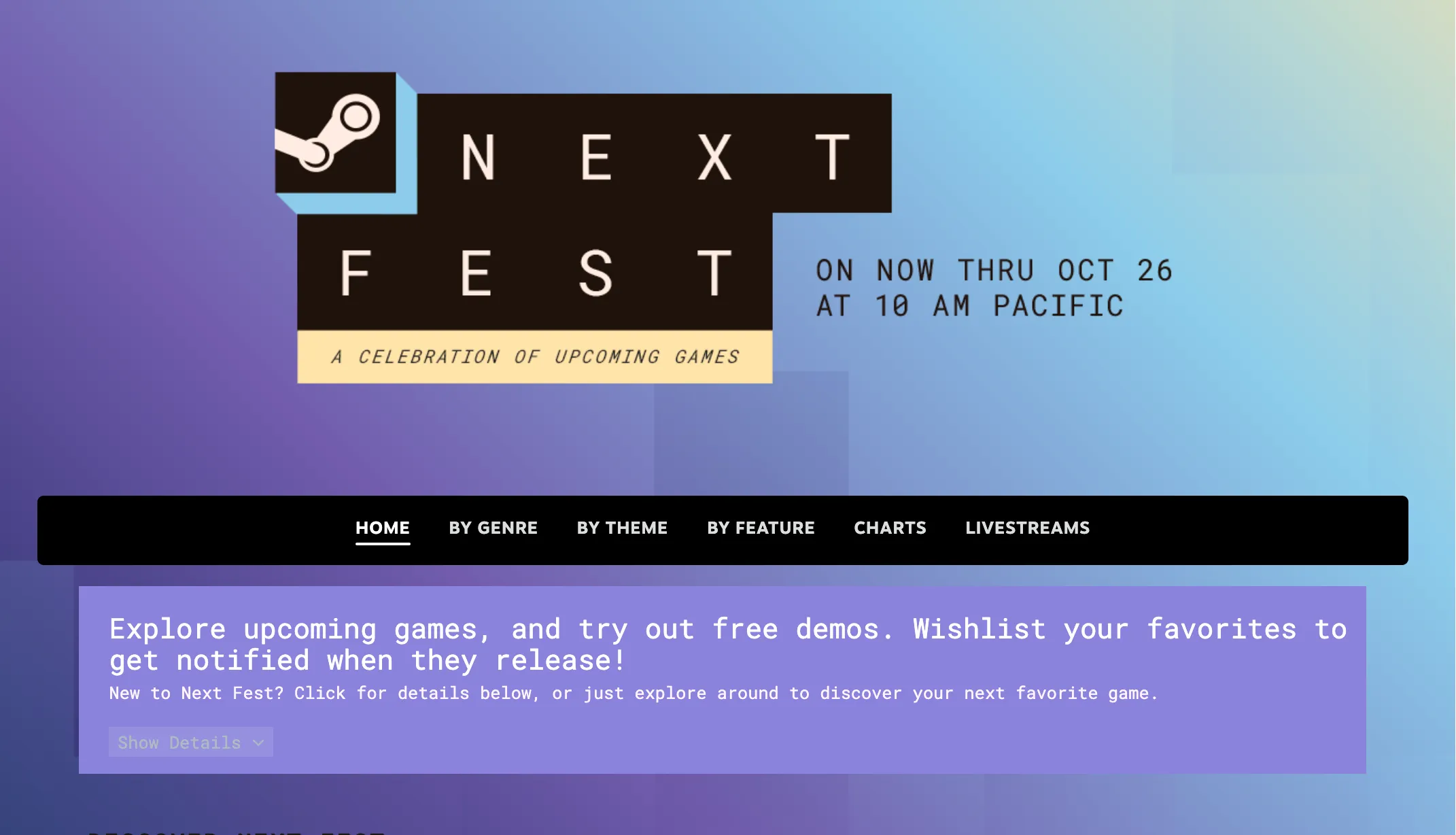 Screenshot of Steam’s Next Fest page. / Credit: Valve Software
From 1,000 to over 7,000 demos
According to Steam’s Next Fest page, 7,280 games are part of the festival. In June it was 4,382, and in February 2024 around a thousand.
Developers feel it. Hauk from Vertebrae Entertainment, a two-person studio in Hamar, Norway, taking part in this Next Fest, tells me:
“Sadly, it’s a well-known problem among developers that Next Fest has lost a lot of its effectiveness over the last few years. It’s becoming more and more important to secure many small sources of attention, rather than betting everything on a few big ones. Next Fest is now more one piece of the puzzle than a cornerstone of the marketing.”
AI makes everything easy and fast
So why are there so many demos at Steam Next Fest?
In June, more than a quarter of the demos disclosed the use of AI on Steam. The numbers for October aren’t out yet, so we don’t know exactly how much of the increase comes from games with the “made with AI” label.
But AI technology keeps making game development easier, and more developers worry it also makes it easier to copy other people’s ideas.
AI has become so powerful it can reverse engineer a lot, and the tool REA, “Reverse engineer anything”, has trended as number one on GitHub in the last few weeks. All you need to copy something is time and a bit of money for tokens.
That scares game developers. Spanish studio Digital Sun, the team behind Moonlighter, has delayed the public demo of its next game ReVamp for fear of it being copied before release.
Japanese studio Alliance Arts cancelled the Next Fest demo of Drunken Goddess Reflux, naming the fear of copying as one of the reasons.
AI makes Fractured North possible
Kristian Brynie Hollund from Sandnes, Norway, develops the co-op game Fractured North in his spare time, and has previously told Gamer.no (in Norwegian) that AI helps him cut down on development time.
He isn’t worried about anyone copying his game.
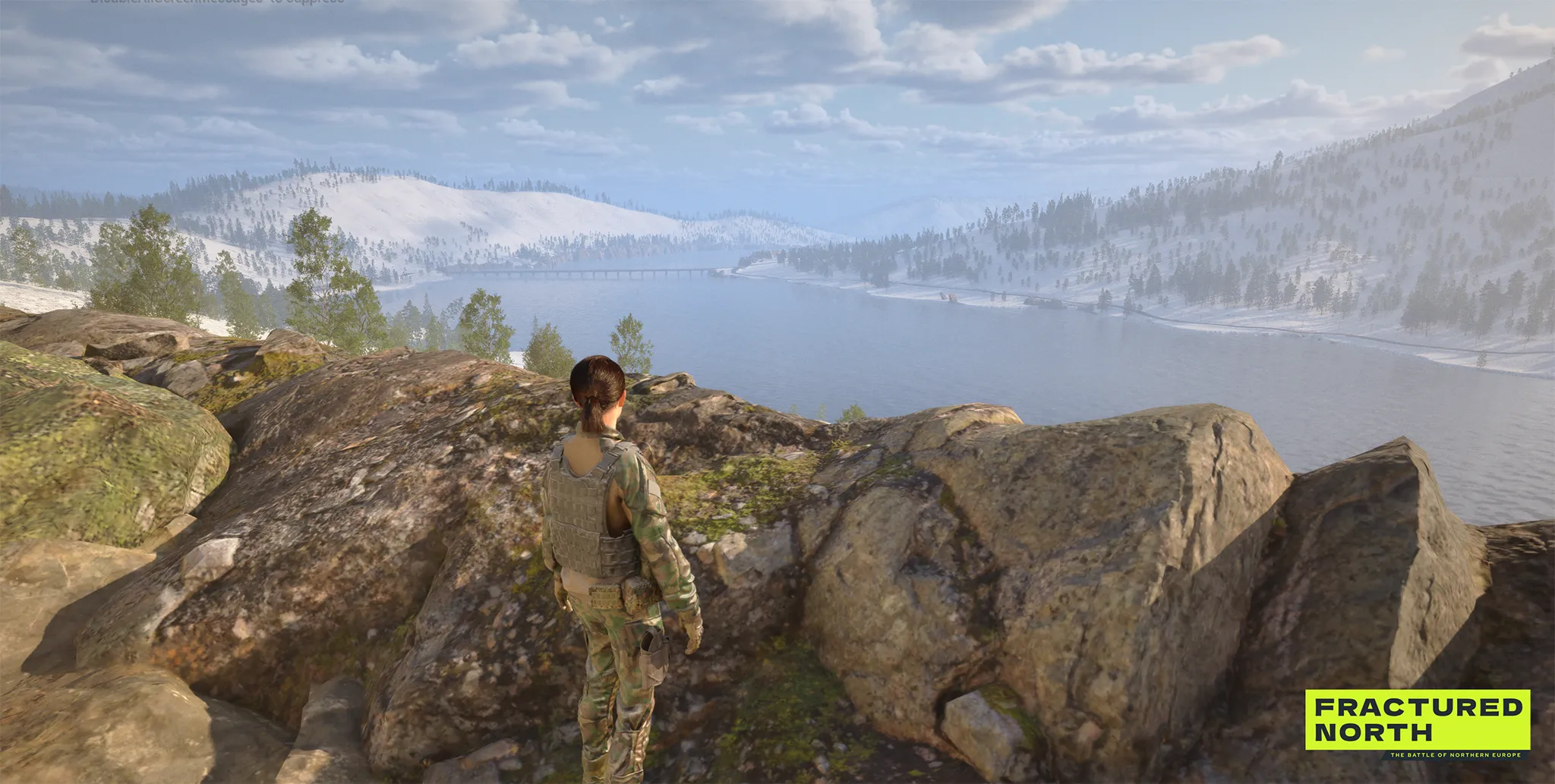 Fractured North and its fabulous Nordic landscape. / Credit: Zeticeta / Fractured North
“Chinese companies have been doing this for 10+ years already, especially in the mobile market, but elsewhere too. Whether it’s an AI or a human doing something illegal doesn’t change much,” Hollund tells kaytomas.com.
He uses Claude for C++, for organising, and for building terrain and landscapes based on real map data.
“Since I’m making a realistic game, I’m just recreating reality. Whether I model it myself, use photogrammetry or AI, it’s about things having to look right. AI lets me make my game, without anyone weighing in on everything to please focus groups,” he tells me.
To stand out, he has a simple approach:
“I believe in building something your friends want to play, and then expanding from there. There are also lots of communities of like-minded people and communities around similar games you can plug into. Good old community and contacts, simple as that.”
TEKNOKRAT doesn’t use AI
Not every Norwegian developer sees it that way. Vertebrae, the studio behind TEKNOKRAT, has chosen not to use AI. The game is a queer, interactive cyberpunk story in a visual novel style.
“We’ve concluded that the technology is a waste of time for our studio. We like to hold every single thread ourselves. There are some completely unique qualities that only come out when a work is exposed to the healthy friction of the boring tasks, and to being forced to sit with the same thoughts for a long time,” Hauk tells kaytomas.com.
They aren’t afraid of being cloned either:
“We think that even if someone copied TEKNOKRAT, it wouldn’t be copied in any meaningful way.”

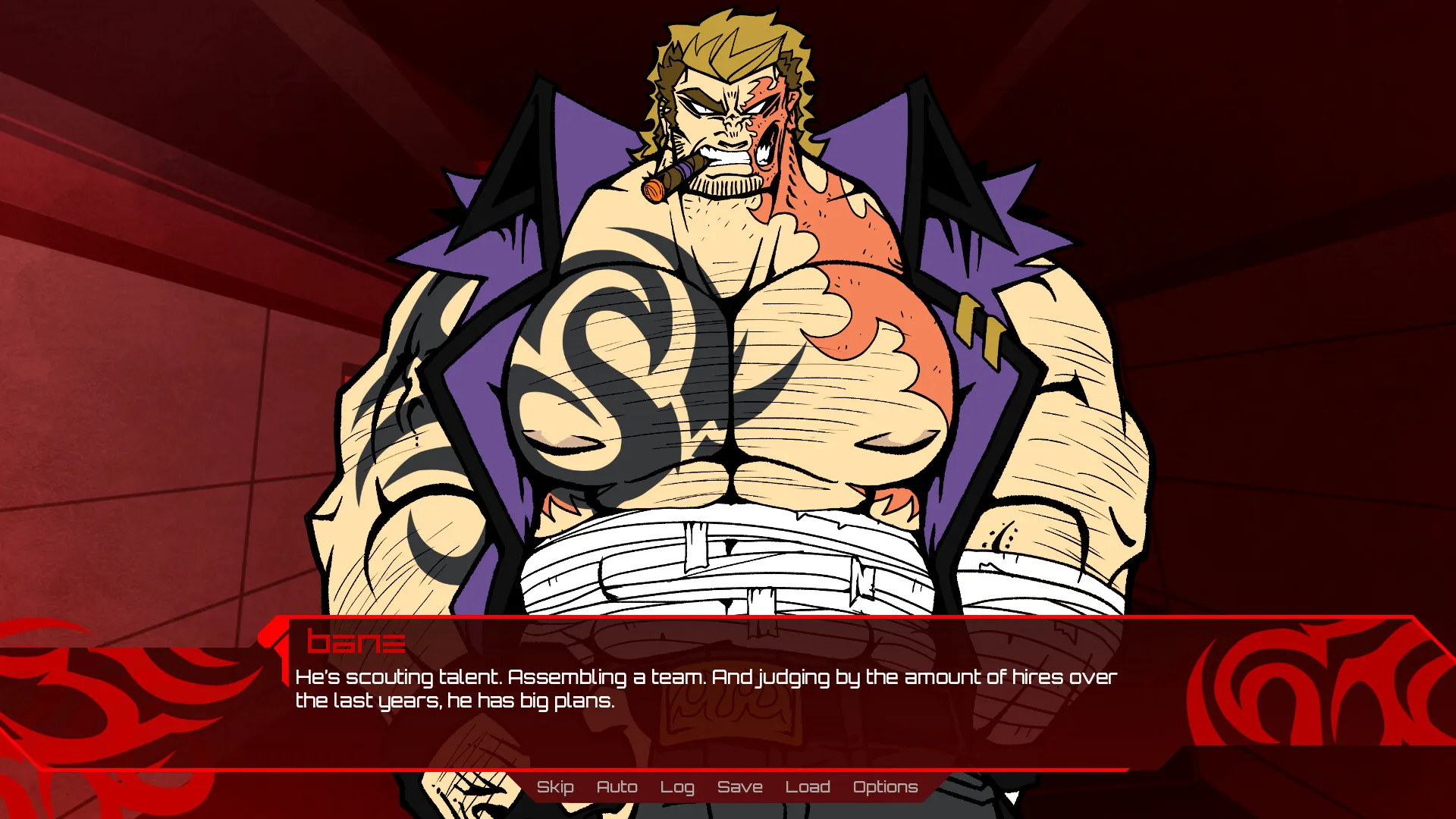 The character Bane in TEKNOKRAT. / Credit: Vertebrae Entertainment
AI can solve stuff too
AI isn’t purely negative. I know there’s a lot of hate for generative AI out there, internet pitchforks and all, but it also enables completely different workflows for smaller teams.
You get more done in less time. Many can’t afford to hire someone to do the job, but they can afford to use AI for certain tasks.
My point is that game development is hard and expensive. But if AI makes it possible for more people to create games, isn’t that a good thing? Or are we simply drowning in more content?
I want to mention an example involving Bethesda’s reputation for buggy engines. LTSharpe, a modder, used Claude to find bugs in Oblivion Remastered. That’s exactly the kind of thing tools like REA make possible.
And the result? A free, open-source mod that, according to the modder, gives around 30 percent higher FPS in Oblivion. Made by one person with Claude over two weeks. What does that open up for solo developers or small teams?
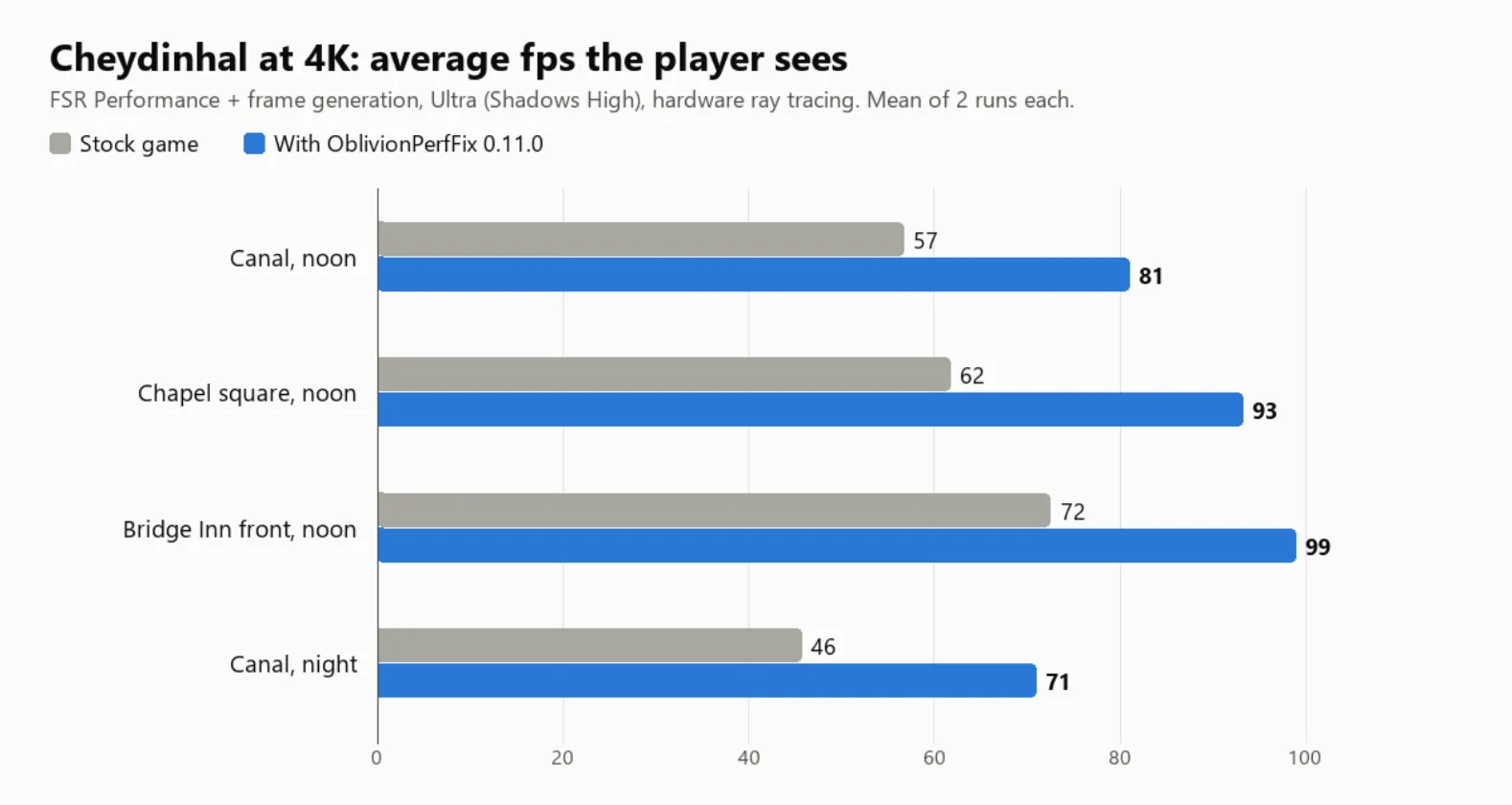 The modder’s own measurements in Cheydinhal at 4K: grey is the original game, blue is with the mod. / Credit: LTSharpe
The same technology lets one developer do what used to take a whole team. That makes it cheaper and easier to release games.
The question is what we want. Will the good games find their audience in a forest of other releases?
At the same time, we should stand behind our own ideas and build our own audience. You can copy game mechanics, but the human touches that give a game its personality are much harder to replicate.
Hiding your game isn’t a good solution, because if nobody has seen your product, nobody is going to buy it either.
Does it matter?
We don’t know how many of the 7,280 games at Steam Next Fest are made with AI. But does it matter? You could argue good content is good content, no matter how it was made. I’ll be following how this develops, at least.
Steam Next Fest runs until October 26. That’s also when Valve’s list of the most played demos arrives. I’m curious how many of them have disclosed using AI.