
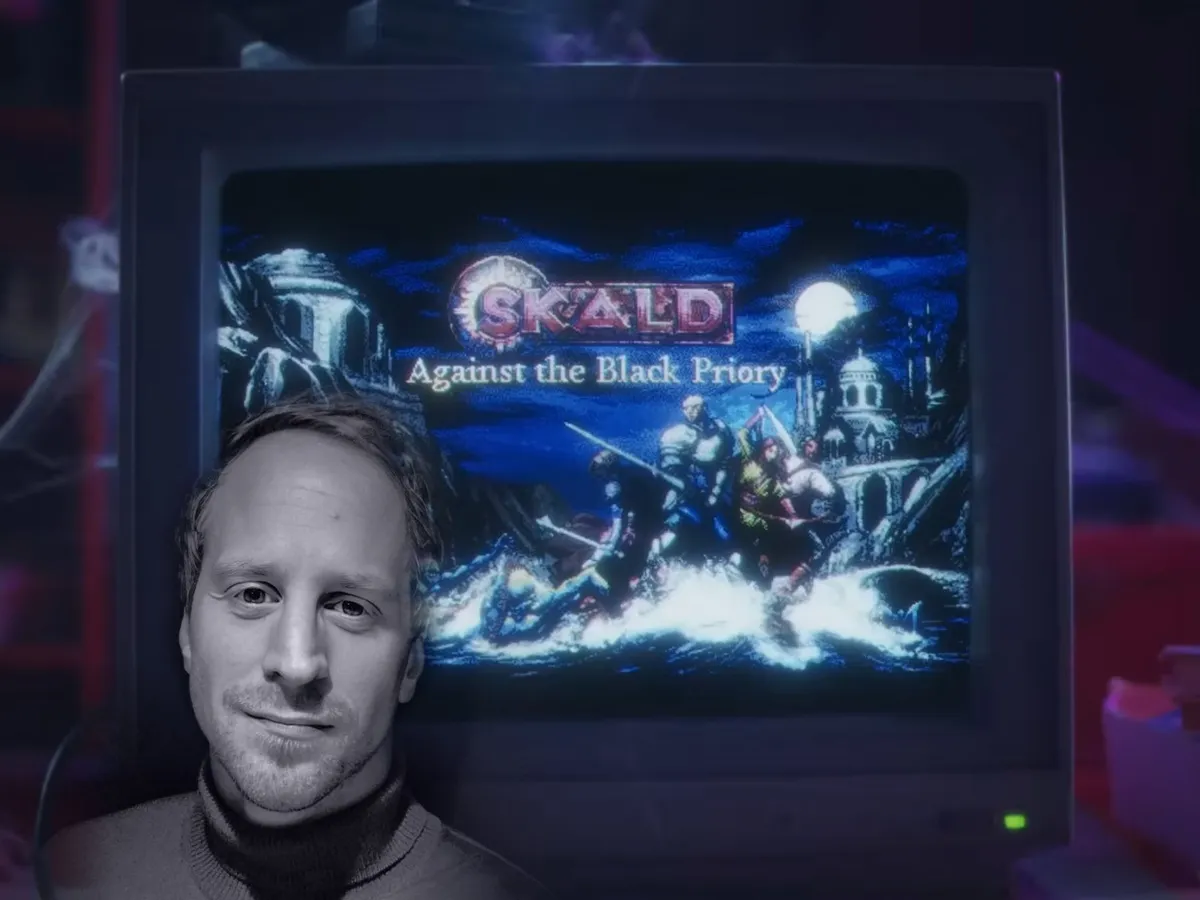
The RPG from the north that found its audience all over the world
SKALD: Against the Black Priory is a role-playing game dressed in heavy retro aesthetics, with cosmic horror and an obvious love for the RPGs of the late 80s and early 90s. It was made by Anders Lauridsen of High North Studios, almost entirely on his own, and published by Swedish Raw Fury on May 30, 2024.
The incredibly cool trailer for SKALD: Against the Black Priory / Credit: Raw Fury / YouTube
On Sunday, March 9, 2025, I sat down with Anders over Discord. We talked for more than an hour and a half, about everything from Mario levels drawn on paper to how he got the publisher Raw Fury on the hook after the first rejection.
This interview is not sponsored. The conversation took place in English over Discord, and was transcribed and shortened for this format.
An NES shock in childhood
Anders grew up in Northern Norway, in what he himself calls “the Norwegian equivalent of Alaska” (read: Finnmark). Games were a big part of growing up, and not just video games.
“I’m one of the people in a generation where I do remember a period in my life when video games did not exist,” Lauridsen says. “Then one day our parents brought home an NES, and suddenly video games existed. I was very young, maybe five or six, and I was mind blown.”
“In between playing sessions I was sitting with paper, drawing video game levels, cutting out figures and moving them around on the level, and just thinking: how does a TV work? I spent pretty much all my teen years making my own rule systems and character sheets. I still have binders of things that I made. I drew my own monster manual!”
“The funny, ironic thing is that at no point did I ever consider becoming a game designer. Games were just something that came from Japan. It was a magical land where people did karate and made games.”
His studies and career went in a completely different direction. But his years behind the screen as a game master gave him valuable experience in his day job.
I started being a game master when I was 12. It was before the military, and long before university. That was where it started.
“A successful game master does a type of hidden leadership,” he says. “You involve everyone, make sure everyone feels heard, and make sure you are moving the discussion forward. If you hear a good idea, you silently let it take form and grow in the group. If you hear a bad idea, you use body language to tone it down. The group doesn’t really know you’re doing either of those things, but the good idea is the one that gets chosen.”
His advice to anyone who wants to learn game design is crystal clear: start with pen and paper. When you watch people play your rules at a table, you see right away where the friction is.
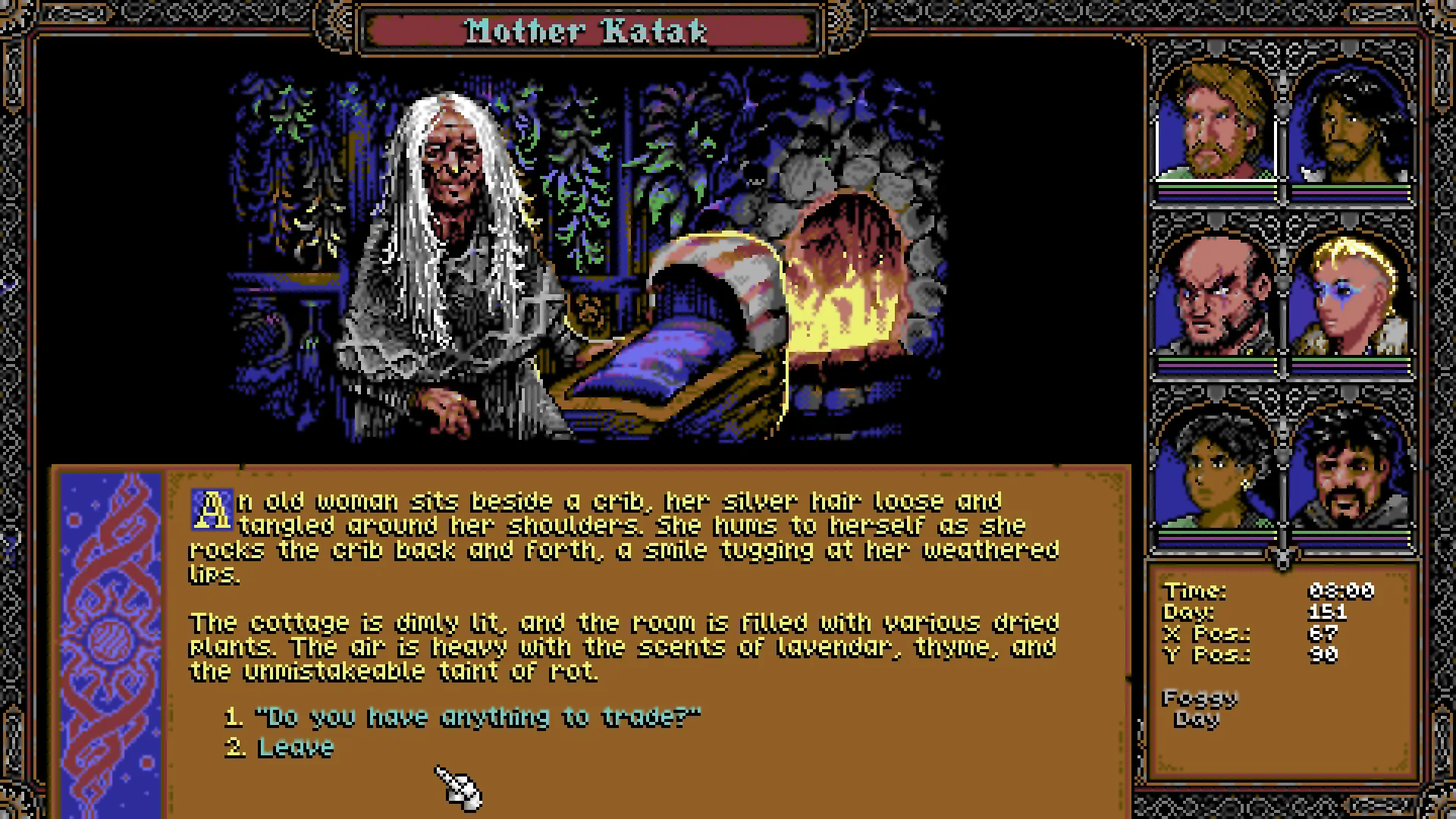 Mother Katak, one of the text-driven encounters in SKALD / Credit: High North Studios
Minecraft, the indie scene and a boring job
SKALD came out of a kind of perfect storm around 2011: his kids had discovered Minecraft (a game everyone knew was made by one person), Anders watched the documentary Indie Game: The Movie, and he was fed up with his job.
“I remember sitting in my office and thinking, programming sounds so cool,” Lauridsen says. “You can work whenever and wherever you like, and it’s the type of problem solving I know I would love. So I went: I wonder if there are tutorials on YouTube.”
“When you start programming, there’s always a type of toy application you keep making to practice, and for me it was very often a role-playing game. How do you make an inventory system? A dialogue system? I spent many years doing that, and then I started looking at all these hobby projects and thinking: I have a very rudimentary role-playing game here.”
From there he wrote a short design document: 16 colors, the Commodore 64 palette, low resolution. The document remained almost untouched for five years. He points out that the pitch should take 30 seconds to explain, and that this made it easy to see who the game was for.
“If you don’t know what you’re making, and you don’t know who you’re selling it to, which is a surprisingly large number of projects, then how are you ever going to sell any copies? It doesn’t work,” he says.
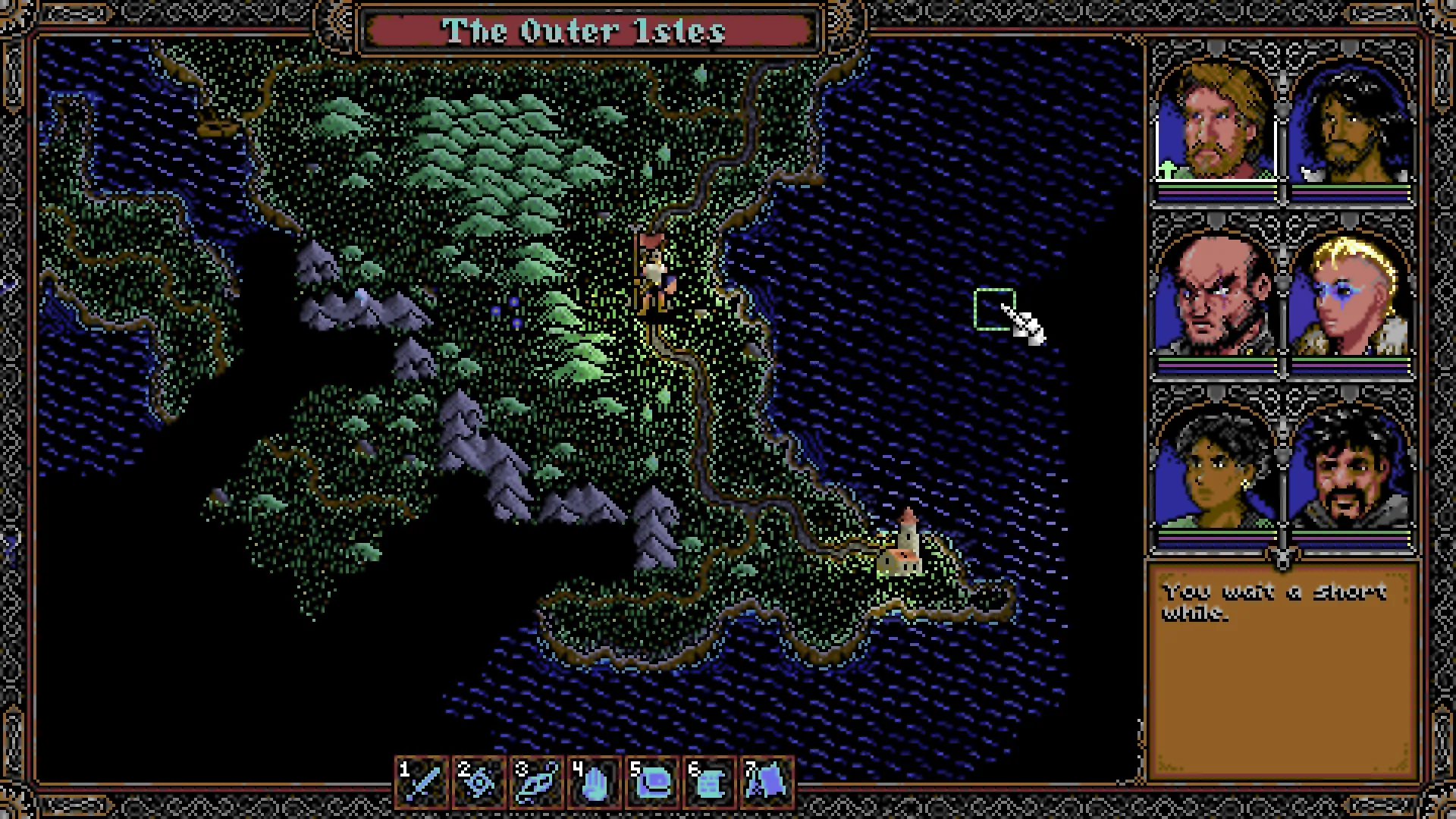 The map of The Outer Isles, drawn with 16 colors / Credit: High North Studios
In February 2019 he posted a mockup on Twitter, where he had ten followers. It got around 80 likes. That was enough. He built a Discord community of retro RPG enthusiasts, and the Kickstarter campaign was fully funded in 24 hours.
Raw Fury said no, but…
The most educational part of our conversation was about how SKALD ended up with Raw Fury. Anders himself stresses that the story is not a recipe, because he was lucky. But it contains three hurdles he thinks most people can learn from.
The first was making sure the scout at Raw Fury knew who he was before the pitch arrived. The second was following up after the summer vacation. And the last one was the most important:
“He came back to me and said: I really dig the game, but this is not for us,” Lauridsen says. “I said okay and went on with my day. Then I started thinking: hold on, if he liked the project, why isn’t it for them?”
“So I went back and asked. The budget I submitted was too low, and the timeline was too short. I asked for too little money because I thought I had to ask for as little money as possible.”
Okay, you are saying no. But let’s do a thought experiment: what would it take to get you to say yes?
After another round internally, the project found a huge RPG fan at Raw Fury, who has worked closely with the game ever since. Anders also stresses that he was never drowning. He had a job on the side, and could say no to small publishers who didn’t offer much.
The game also got production funding from the Norwegian Film Institute, on its first application. He remembers showing up to the pitch in Oslo in a blazer and shirt, while the lobby was full of people in ripped jeans and Super Mario hoodies. His point is that it’s tax money you’re asking for, and that you have to come across as someone it is safe to do business with.
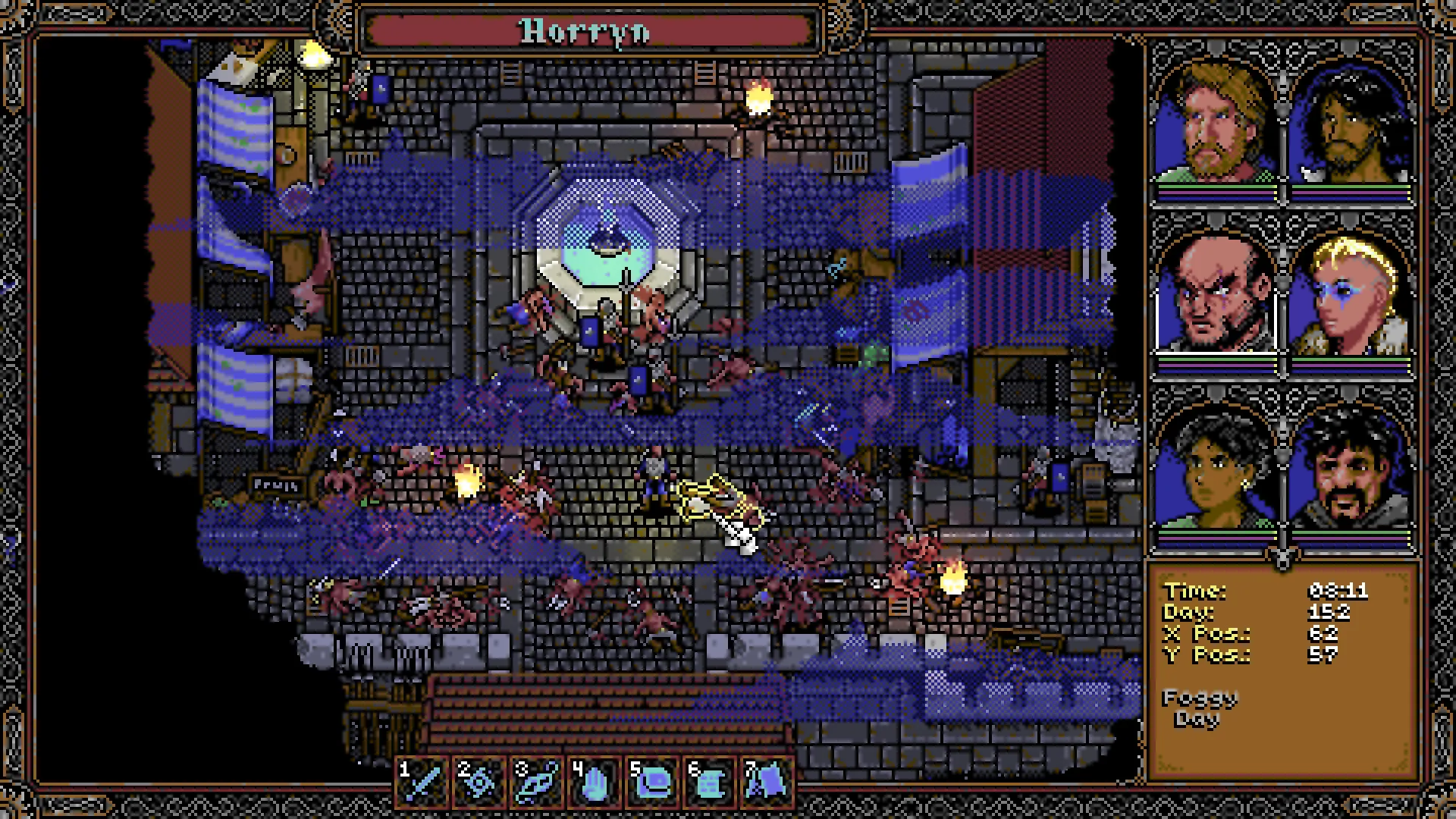 Combat in the town of Horryn / Credit: High North Studios
The body that couldn’t handle relaxing
In the final years before launch, Anders worked up to 16 hours a day. All of it run from handwritten to-do lists, never digital ones. Still, he warns against following his example.
“It’s extreme. No one should do it,” he says. “And never do it as an employee. Only do it if you own the product.”
In the fall of 2024 the bill arrived, in a way he didn’t expect.
“I had some very disturbing symptoms that I couldn’t really make sense of,” Lauridsen says. “I wasn’t really stressed anymore. I went to the doctors and there was nothing wrong with me, and we came to the same conclusion: my body was so used to a high state of stress that it couldn’t cope with not being stressed. It’s like coming home from war, I guess. It blindsided me completely.”
When we talked, he had a normal workday with four or five highly productive hours, a run in the middle of the day and the rest spent on administration. Plus “cat videos,” as he puts it.
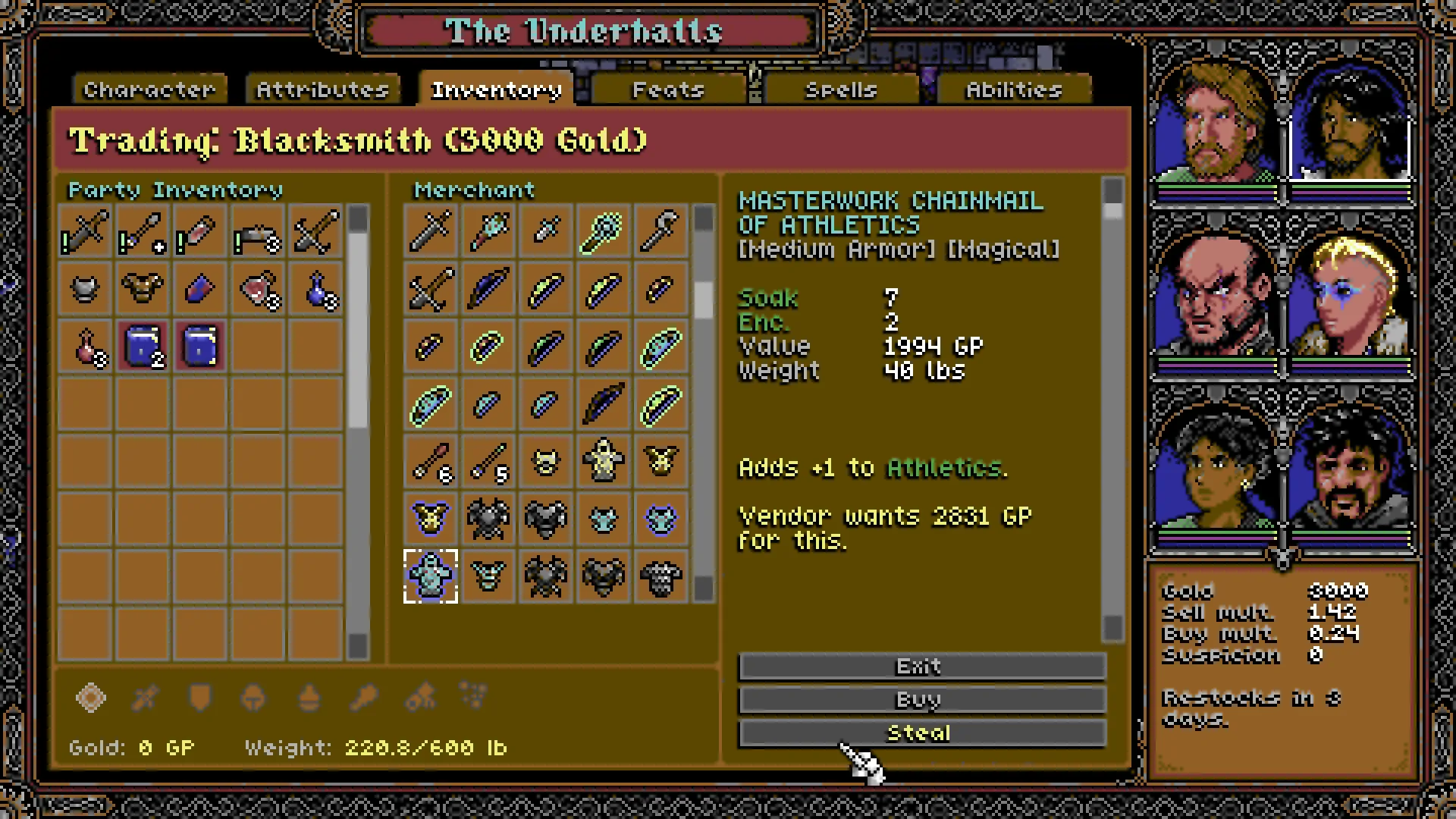 Trading with the blacksmith in The Underhalls. The button at the bottom lets you try to steal / Credit: High North Studios
Retro is about more than the pixels
Finally, we talked about why SKALD hit so well. The retro wave helped, but Anders thinks retro is an entire user experience, not just the number of pixels and colors available.
“Retro is not just the art style. It’s also how you think about the game and how you talk to other people about it,” he says. “That you actually have to go on a forum and discuss a secret you found, like sharing tips in the schoolyard in the 90s.”
“When we made the trailer, I was looking at casting images and saw someone who looked like Finn Wolfhard from Stranger Things. My daughters are huge fans. To them, Stranger Things is the most retro thing out there. The moment they saw the trailer, they understood what the game was about.”
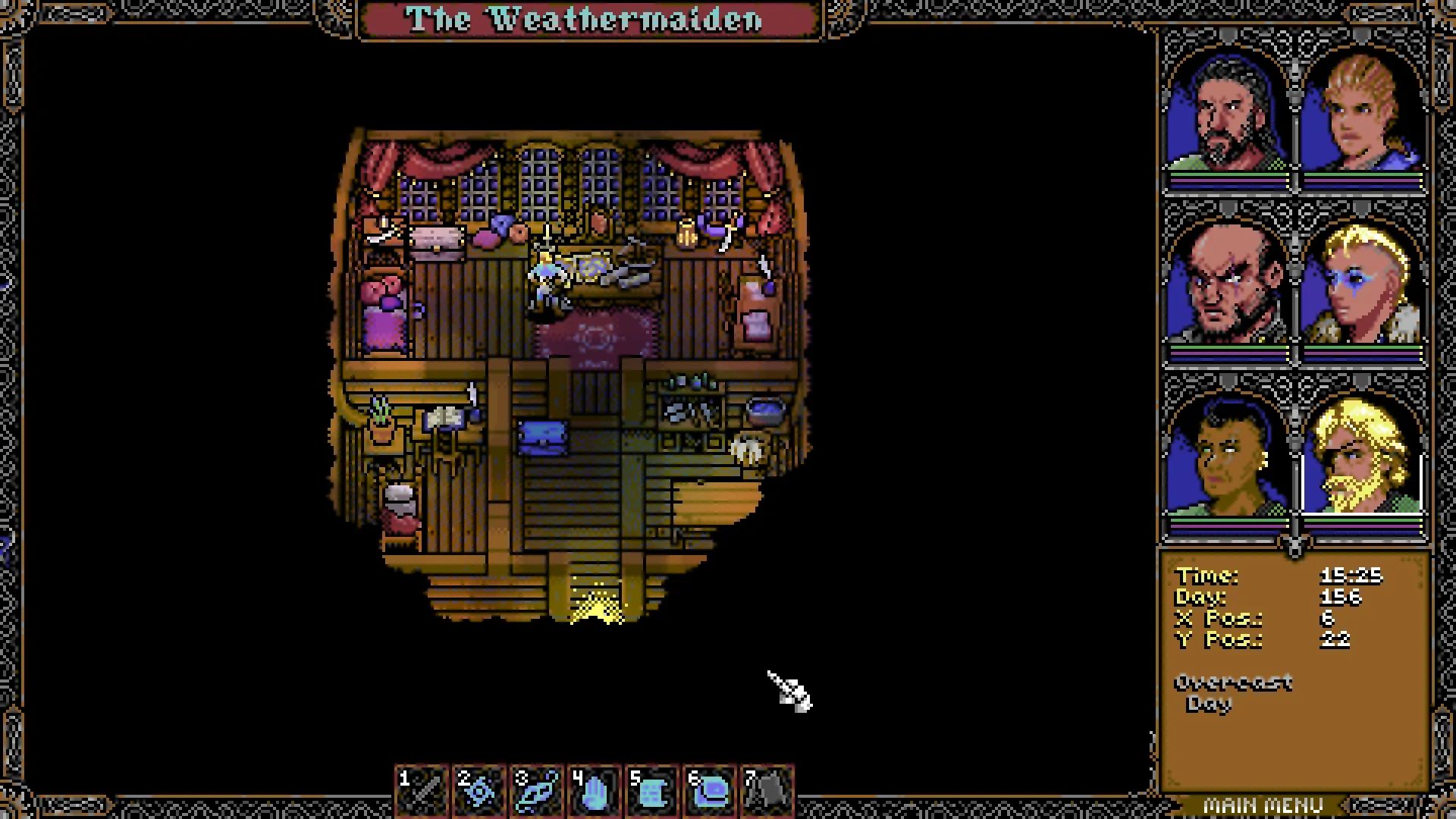 Aboard The Weathermaiden / Credit: High North Studios
Anders also helps other developers, among other things through a mentoring project at the University of Tromsø.
Now that I’m finally getting these words down and talking to Anders, he says he’s working on a new project - which he can’t say much about. What he can say is that it’s incredibly exciting, and reading between the lines, all we can do is keep an eye on High North Studios and speculate about what it might be. Exciting news is expected during 2027.
Big thanks to Anders for taking the time, and for being forthcoming every single time I’ve reached out.
