
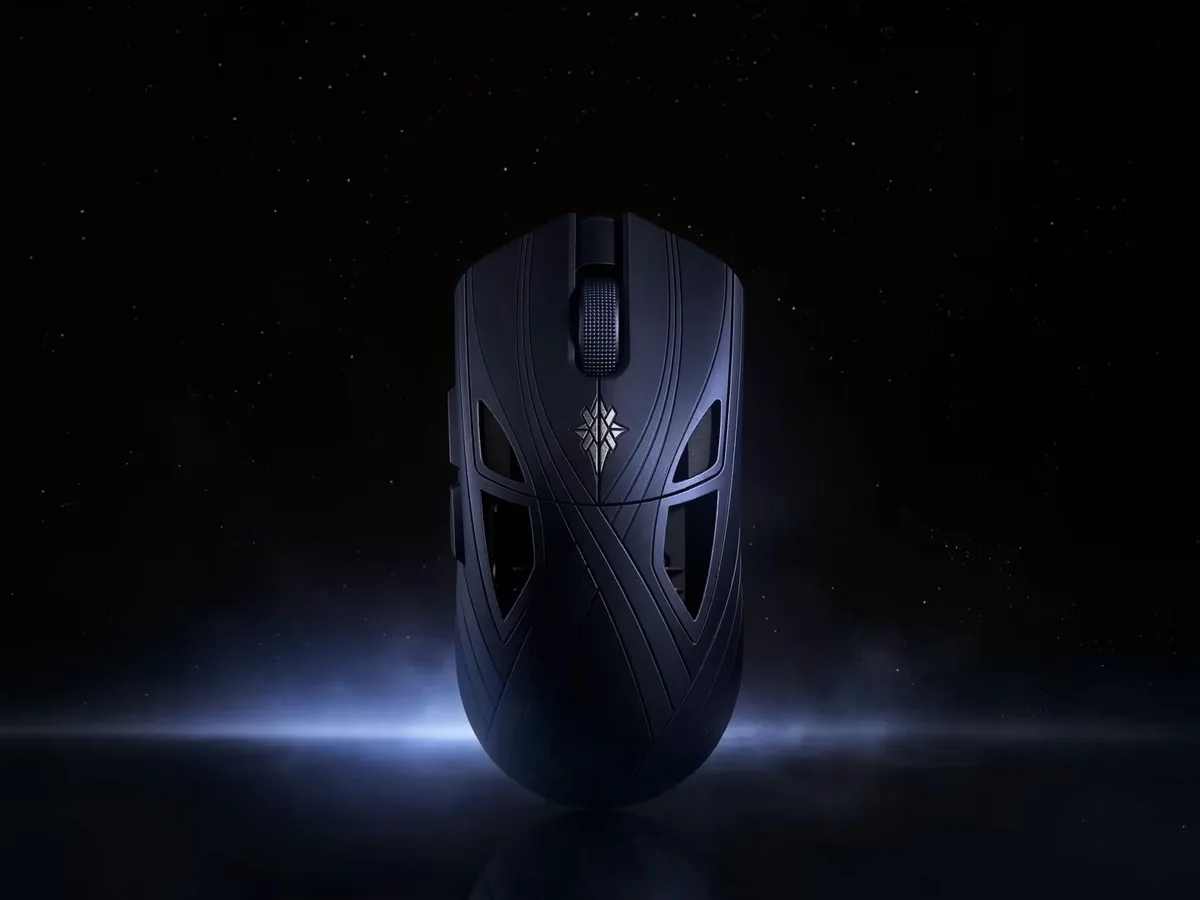
I’m hyped, and I don’t even play CS
I don’t play Counter-Strike. I don’t play Valorant. I’m not a competitive player at all. But I follow the mouse space, and I have a personal vendetta against bloated spec sheets.
The Starlight X, SLX for short, was announced last week, dropped on 30 May 2026 at $179 and immediately sold out. By the time I was finished writing these very words, it was gone!
Everything below is Finalmouse’s own claim from the keynote. No independent testing yet.
Highlights from Finalmouse’s Starlight X technical keynote / Credit Finalmouse
Made for Counter-Strike and tactical FPS
The SLX is Finalmouse’s first new shape in 11 years. Four years, 50+ prototypes, starting in clay. The lineage runs UltraLight Pro to Air58 to Starlight-12 to ULX.
Counter-Strike is the only game named in the keynote. Finalmouse knows that might put off everyone else, and names it anyway. A confident signal to the CS crowd: this mouse is for you.
The shape is tuned for tactical FPS, where most of the aiming is horizontal. Fuller hump, more support, narrower width, defined click grooves for control.
Finalmouse’s TMR-DS Counter-Strike demo segment / Credit Finalmouse
A click system that basically reads your finger
The headline feature is TMR-DS, Finalmouse’s TMR Dual State Analog Click System. A magnet under the clicker and a TMR sensor on the PCB catch your finger the moment it starts moving, no waiting for the switch to actuate. Finalmouse claims this shaves up to 35 ms off click latency, resolves down to 0.01 mm, and is the fastest in the world.
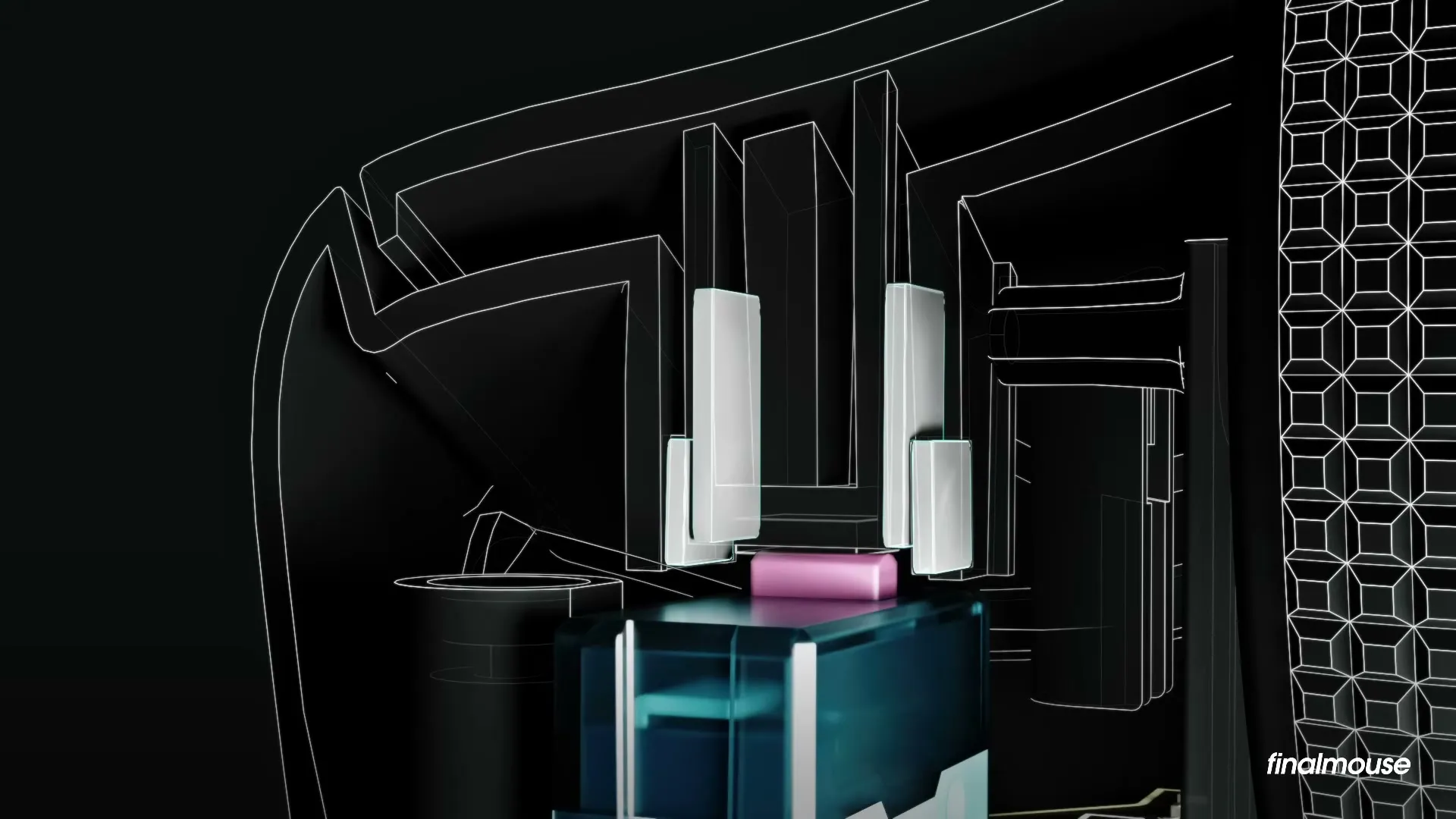 X-ray view of the switch with its dual-rail click guide / Credit Finalmouse
The clever part: the mechanical switch is still in there. The analog sensor runs alongside it, and you pick mechanical or analog mode in software. Feel from the switch, speed from the sensor.
On a pro stage, 35 ms matters. On my desk, the bottleneck is the middle-aged man holding the mouse in one hand, beer in the other.
Human reaction time sits around 200 to 250 ms, so before you blame your hardware, find out where you actually land.
Test your own reaction timeLogitech and Keychron got to analog first
Finalmouse isn’t first to analog clicks. Logitech’s G Pro X2 Superstrike got there earlier this year with haptic-inductive switches, and Keychron showed its own take this month. The difference is in the approach. Keychron packs analog and mechanical into a single unit, while Finalmouse keeps them as two separate systems under the same button, feel from one, speed from the other.
The bet here is resolution. TMR reads finer than the inductive route Logitech took, and Finalmouse claims 0.01 mm steps, 40 of them against the Superstrike’s 10. Whether you can feel the difference between 10 and 40 steps mid-flick is exactly the kind of thing I want an independent reviewer to settle.
A chassis lighter than water
Honeycomb is gone, replaced by a unibody cage held together with 15 graphite-coated titanium screws, an assembly approach borrowed from Formula 1.
The low weight comes from more than the screws. Strategic carbon fiber beaming lets the walls run thinner, and the new material does the rest. No honeycomb needed.
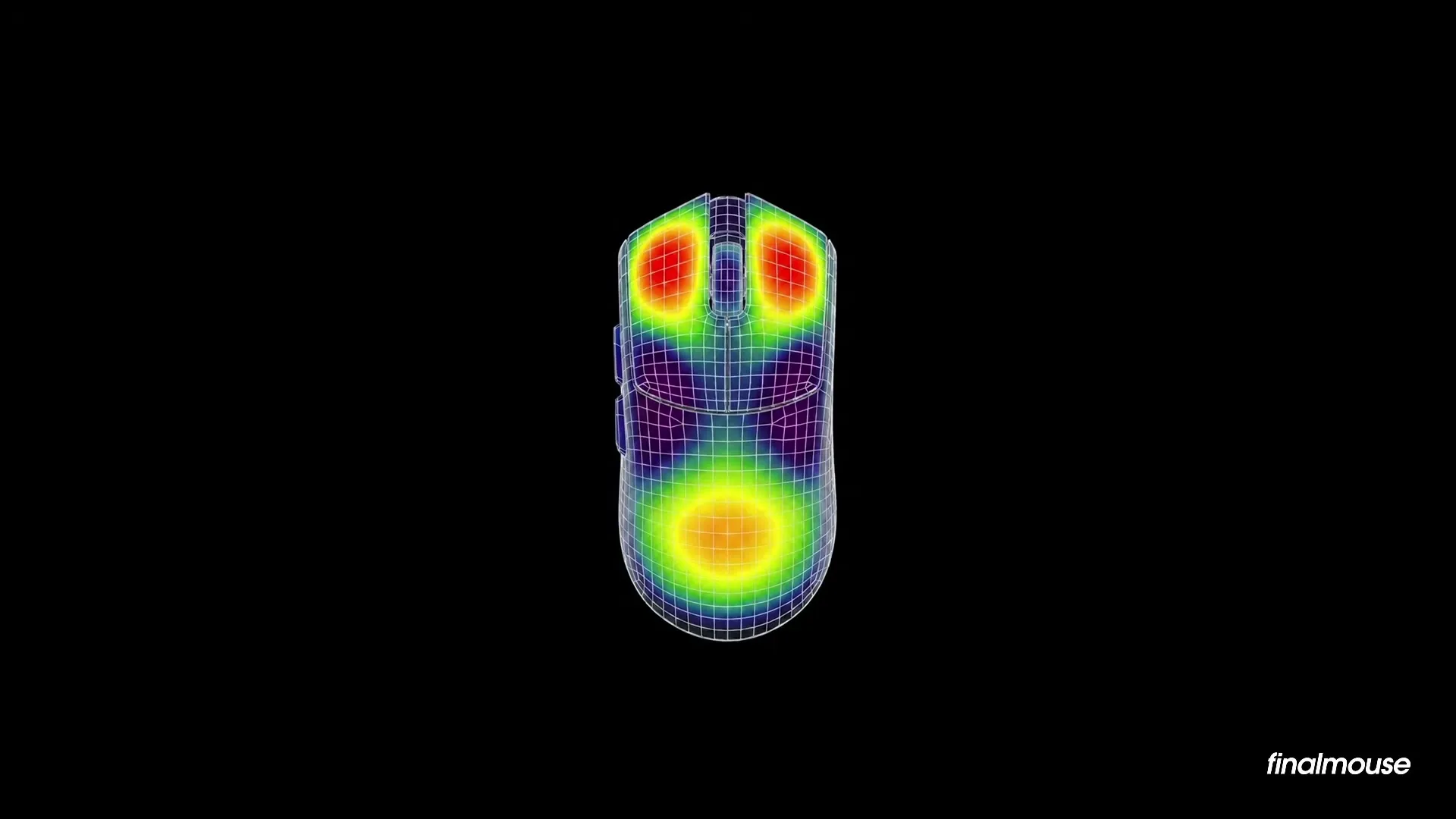 Pressure mapping showing chassis areas a hand never touches / Credit Finalmouse
Those untouched areas are where they hollow out the chassis. Weight gone from places your hand never feels.
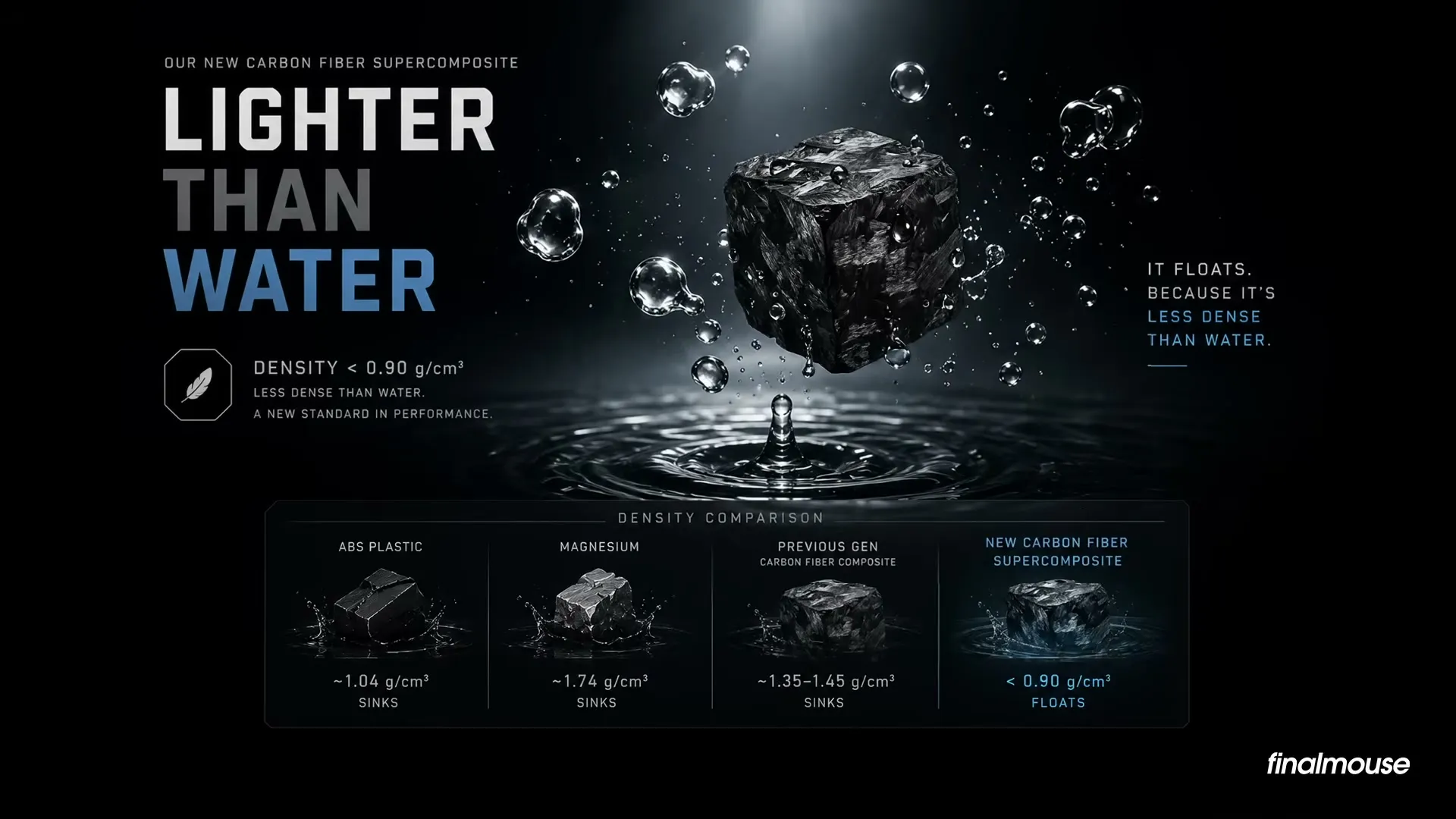 Finalmouse’s rendering of the new aerospace-grade carbon fiber composite / Credit Finalmouse
The shell uses a new aerospace-grade carbon fiber composite. Density below 0.9 g/cm³, lighter than water, with a strength-to-weight ratio Finalmouse claims is three times that of magnesium. Lighter and stiffer than the last generation.
A new dual-rail PTFE click guide, borrowed from mechanical keyboard switches, keeps the click stable enough for the analog sensor to read. Above my pay grade, but when they call it their most stable system ever, I believe them.
A new wireless brain
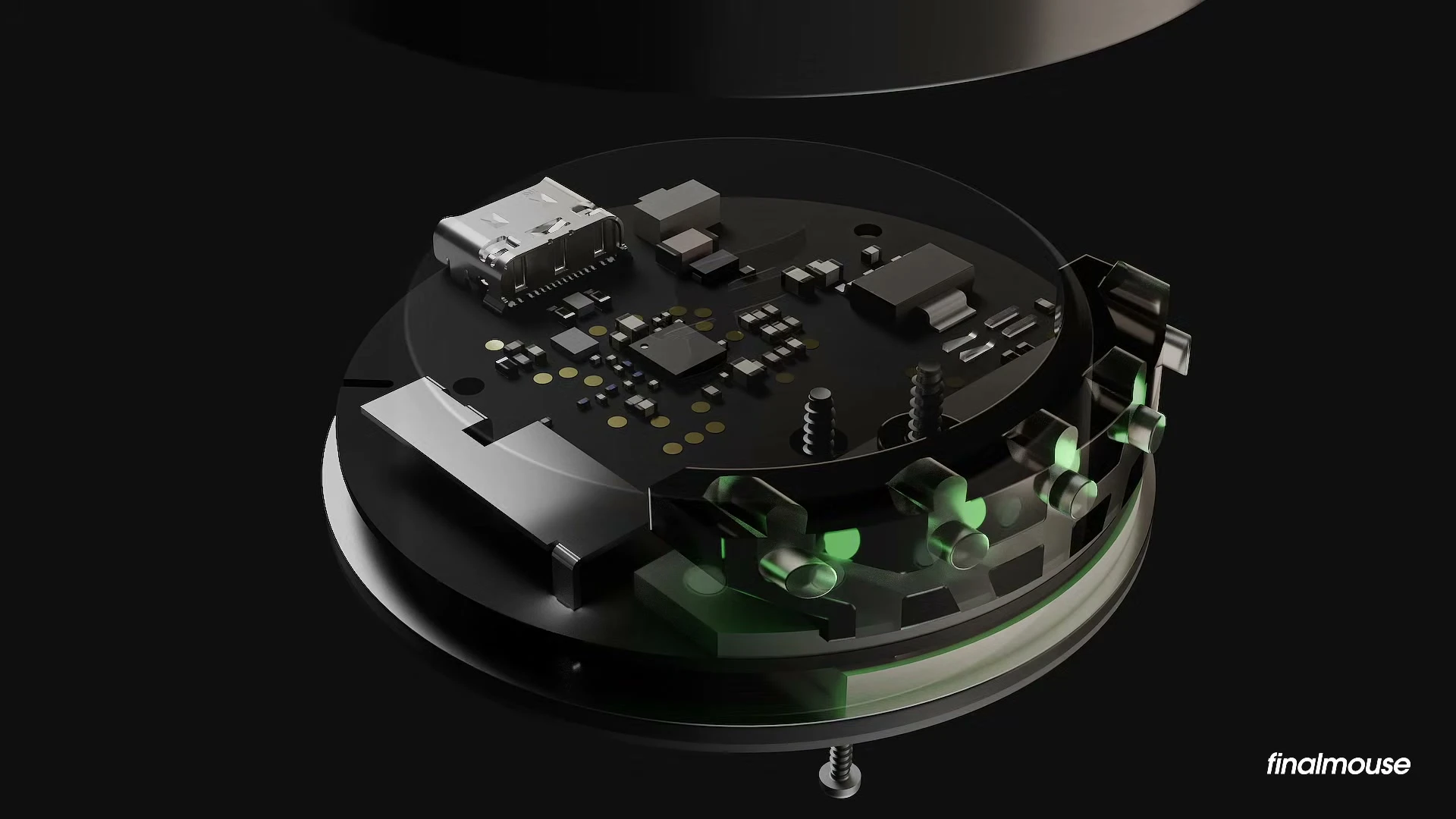
A new Nordic nRF54LM20 microcontroller on a 25 nm process, with high-speed USB on both the mouse and the receiver. That kills the need for a high-speed bridge and drops latency further. Finalmouse is stepping away from the polling-rate spec race in favour of what it calls Perfect Polling and Perfect Sync: an always-on setup it claims keeps the signal chain aligned without smoothing filters or added latency.
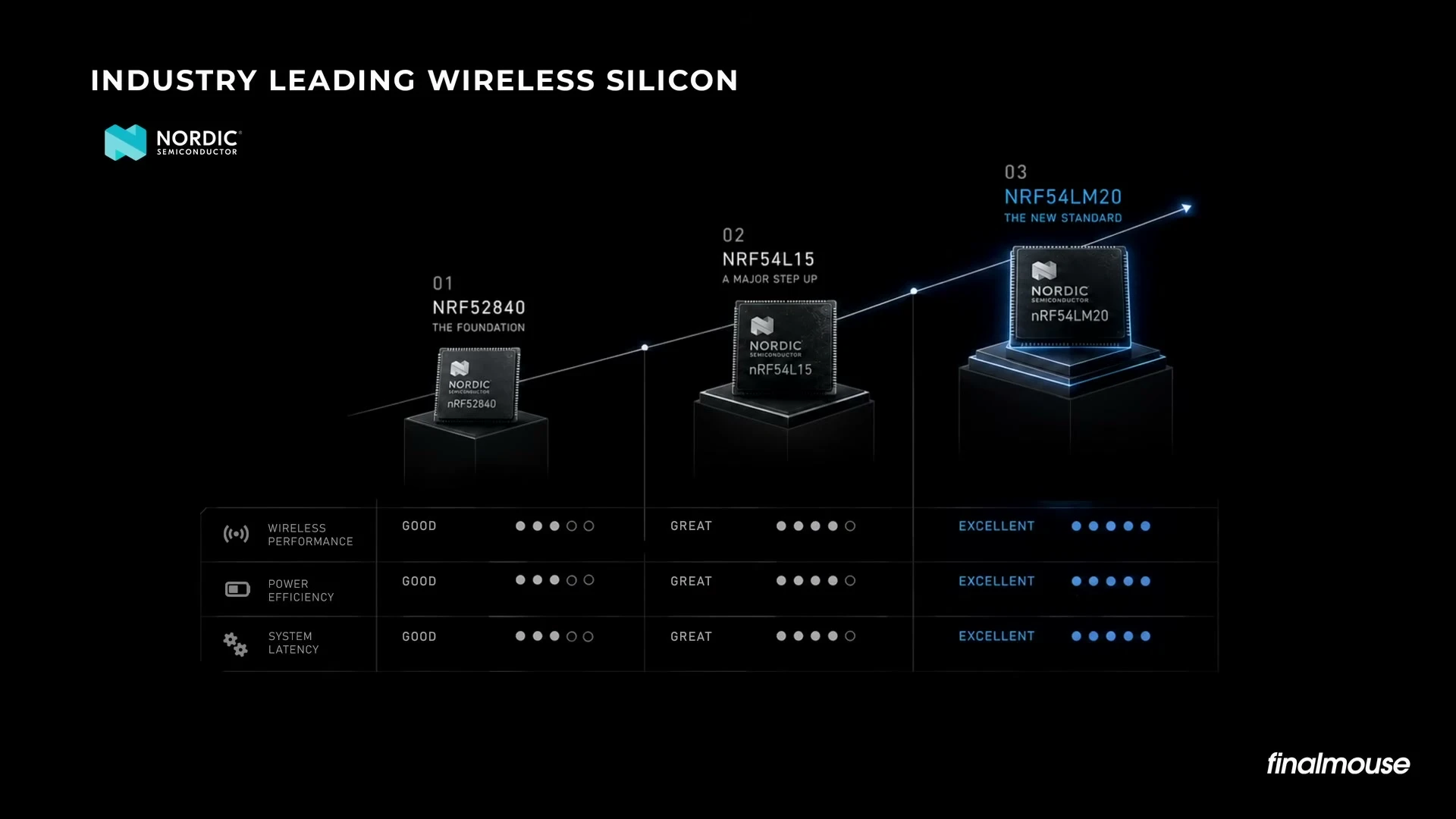
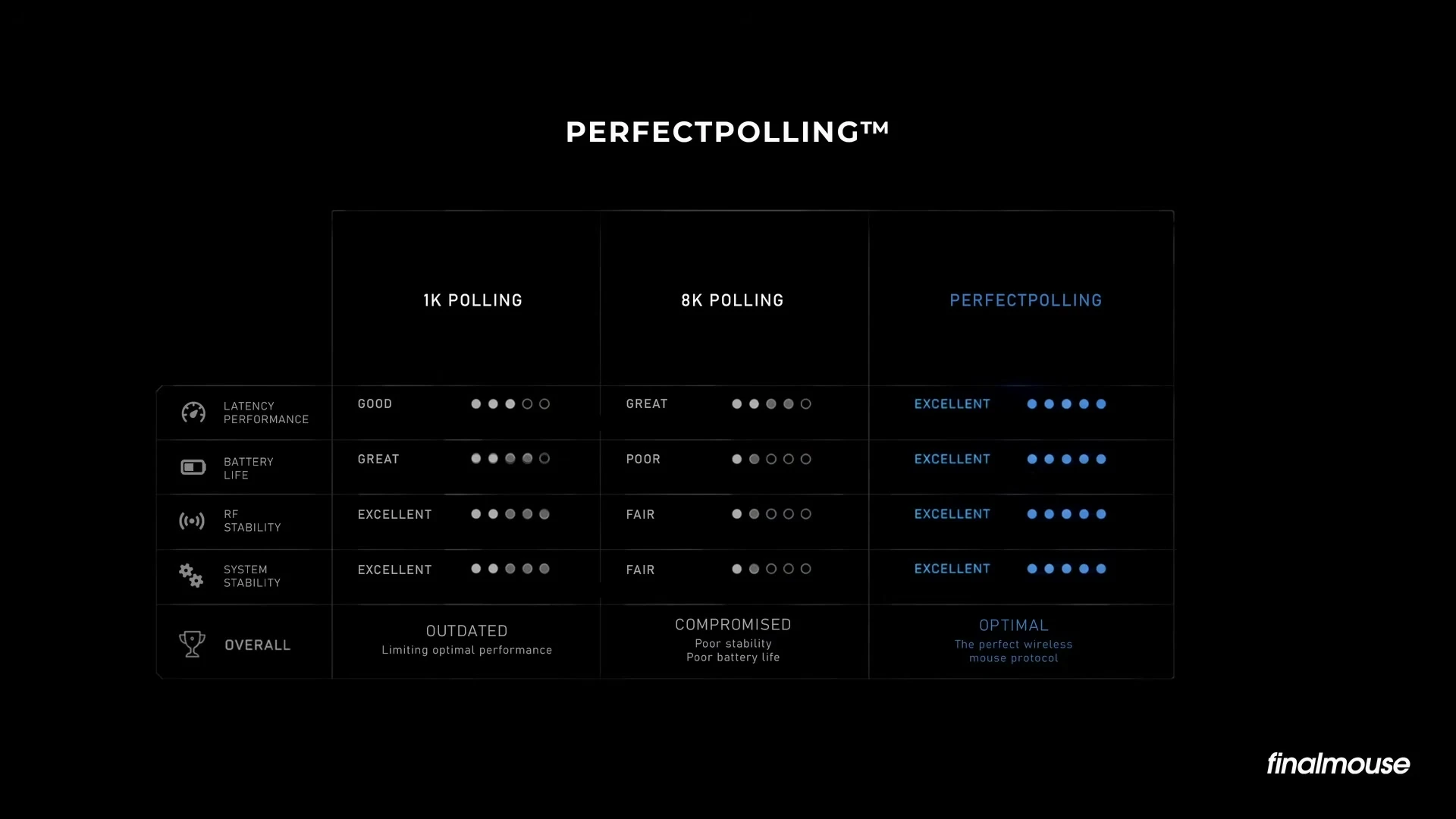
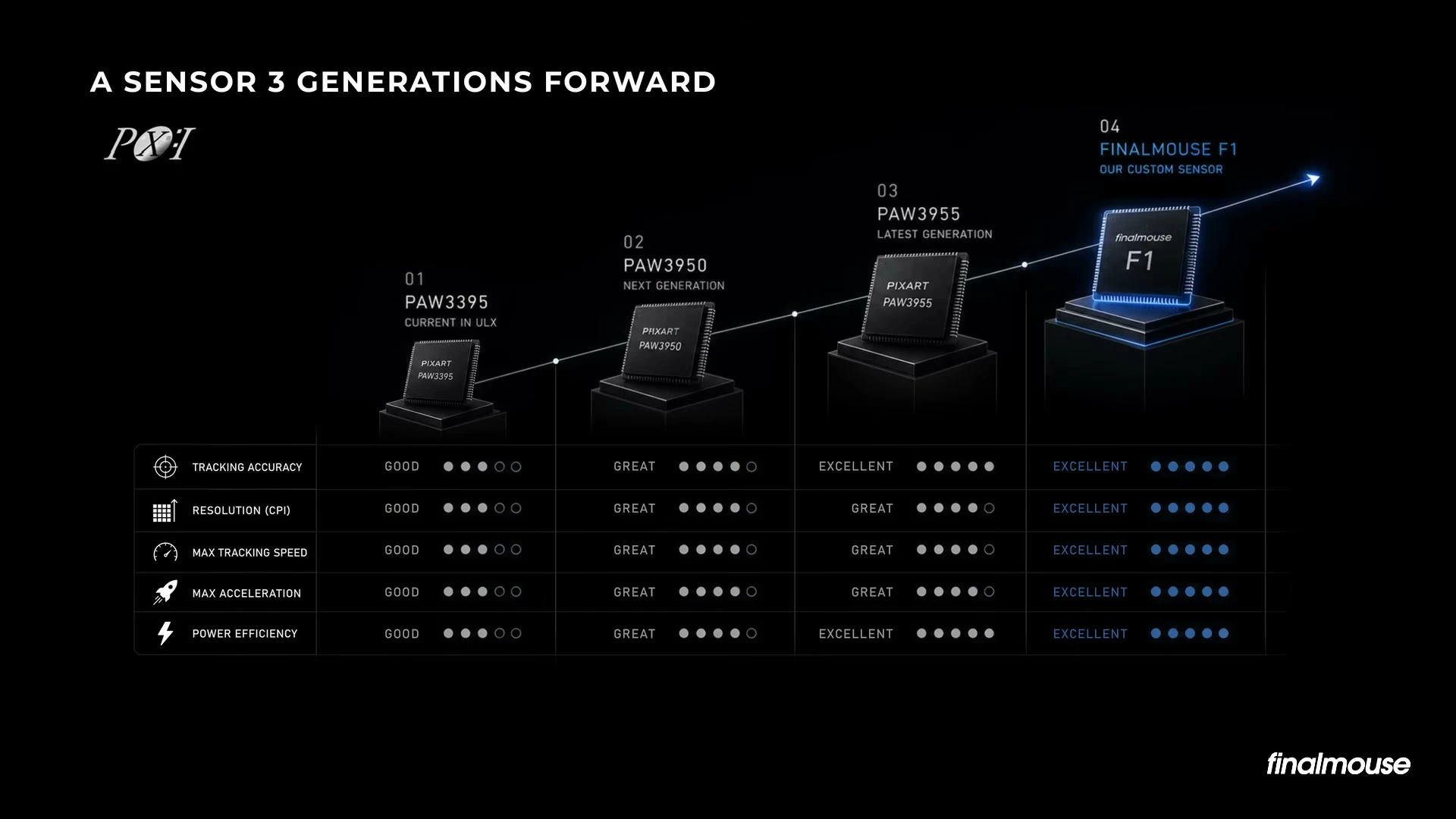
The Nordic nRF54LM20 chip, the Perfect Polling illustration, and the custom Finalmouse F1 sensor / Credit Finalmouse
I love that Finalmouse say they aren’t chasing specs, then rattle off a load of specs anyway. What they actually mean is the polling-rate number won’t be on the box, and it doesn’t need to be. The community should back that up.
The sensor is a custom PixArt-built part branded the Finalmouse F1, which the company claims is roughly three generations ahead of what is on the market today.
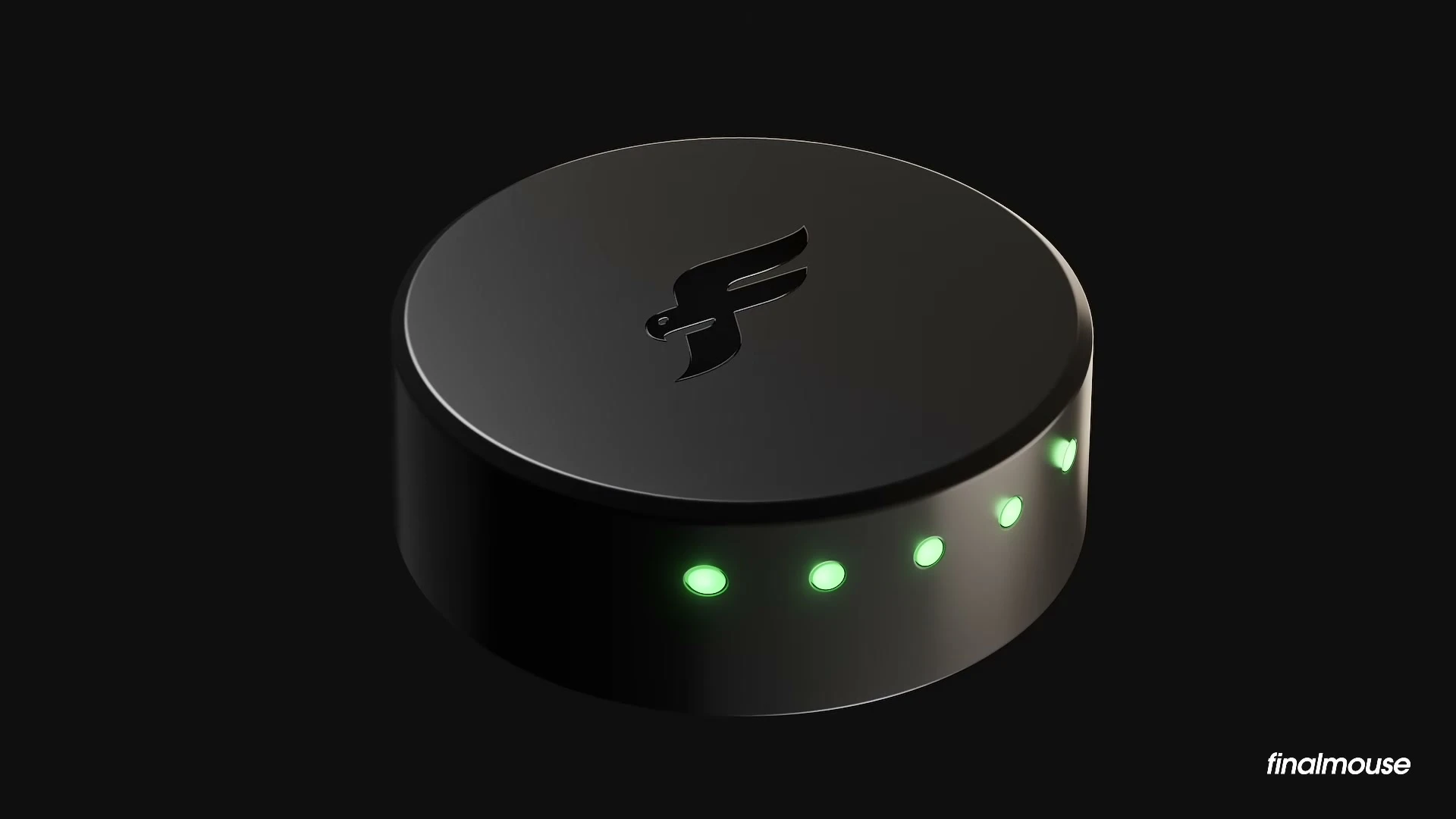
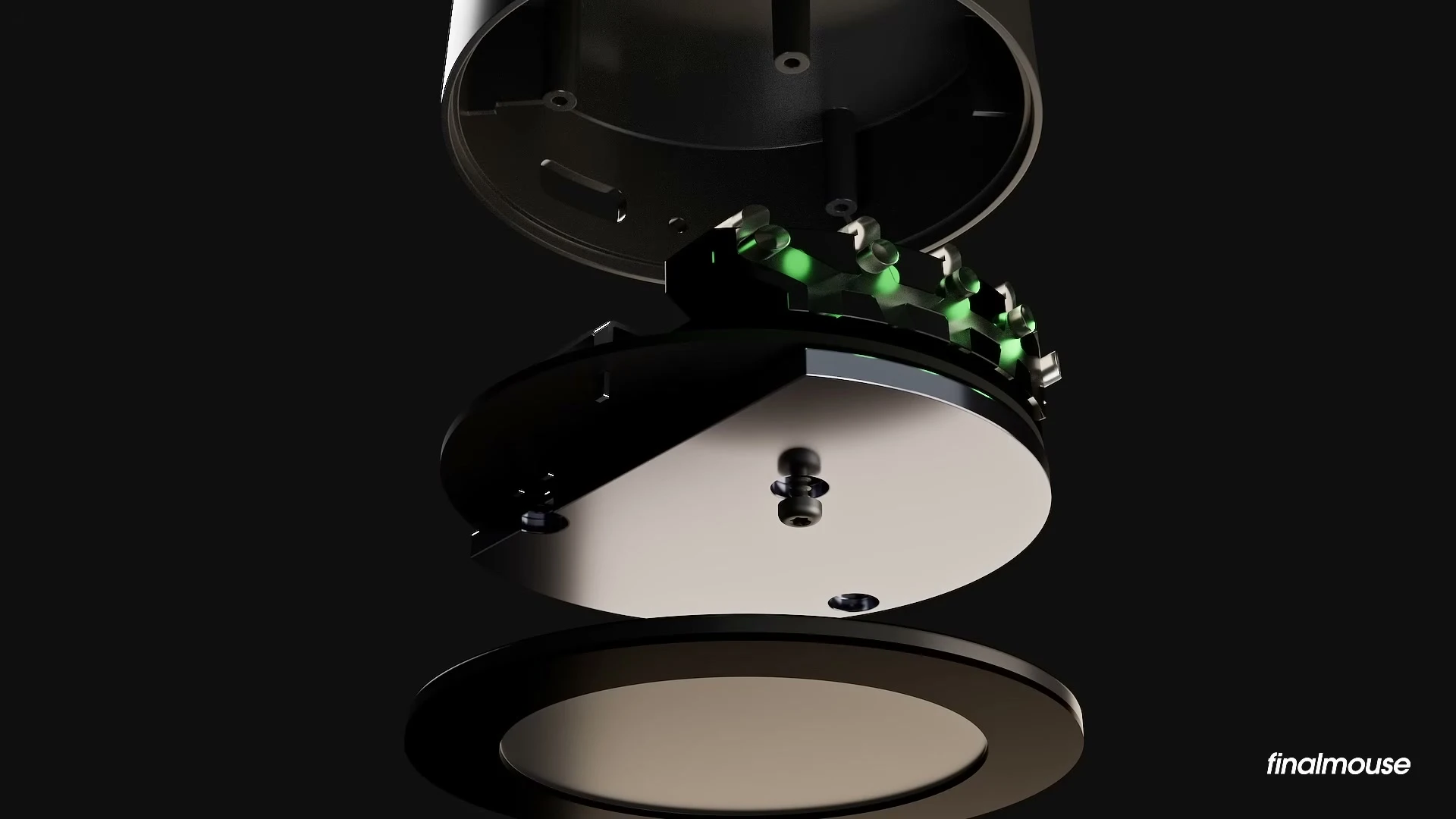
The dongle looks good, and they’ve added weight to it, something I approve of after testing a pile of mice. Status lights on the front, too. This is the way.
A serious contender, and some questions
I’m not the target customer and I’m still nodding along at the screen. If you play competitive CS or Valorant, this reads as a serious pitch. I need to get my hands on one down the line.
At $179 the SLX is premium, but not far off a Logitech or Razer flagship that will sit on a shelf forever.
I keep wondering, how many units were produced? How quickly was it sold out? How do they recoup their R&D investment with a limited drop? Will it come back? How many people work at Finalmouse?
Next thing to watch is Optimum on YouTube, I bet we will get premium independent testing from Ali, the Bruce Wayne of tech coverage, down the line.
Source: Finalmouse, “Starlight X | Technical Presentation” (YouTube).
