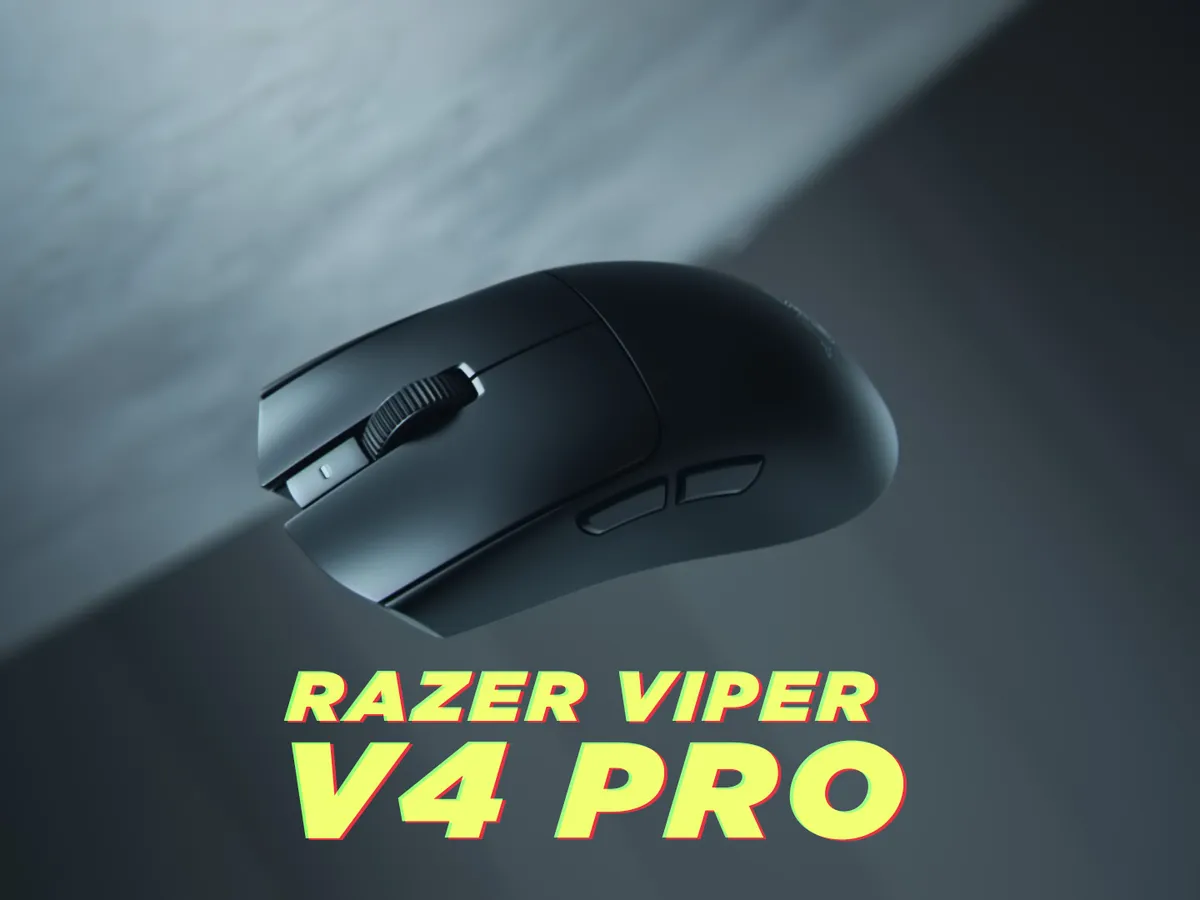
Will the Viper V4 Pro be the next competitive number 1?
Razer has just announced the Viper V4 Pro, mere hours ago. Can it dethrone the current competitive favorite mouse, the Viper V3 Pro, from its competitive throne?
This is the most technically capable wireless mouse Razer has ever shipped. It builds directly on the HyperSpeed Wireless Gen-2 platform that debuted in the DeathAdder V4 Pro, but takes everything to 11.
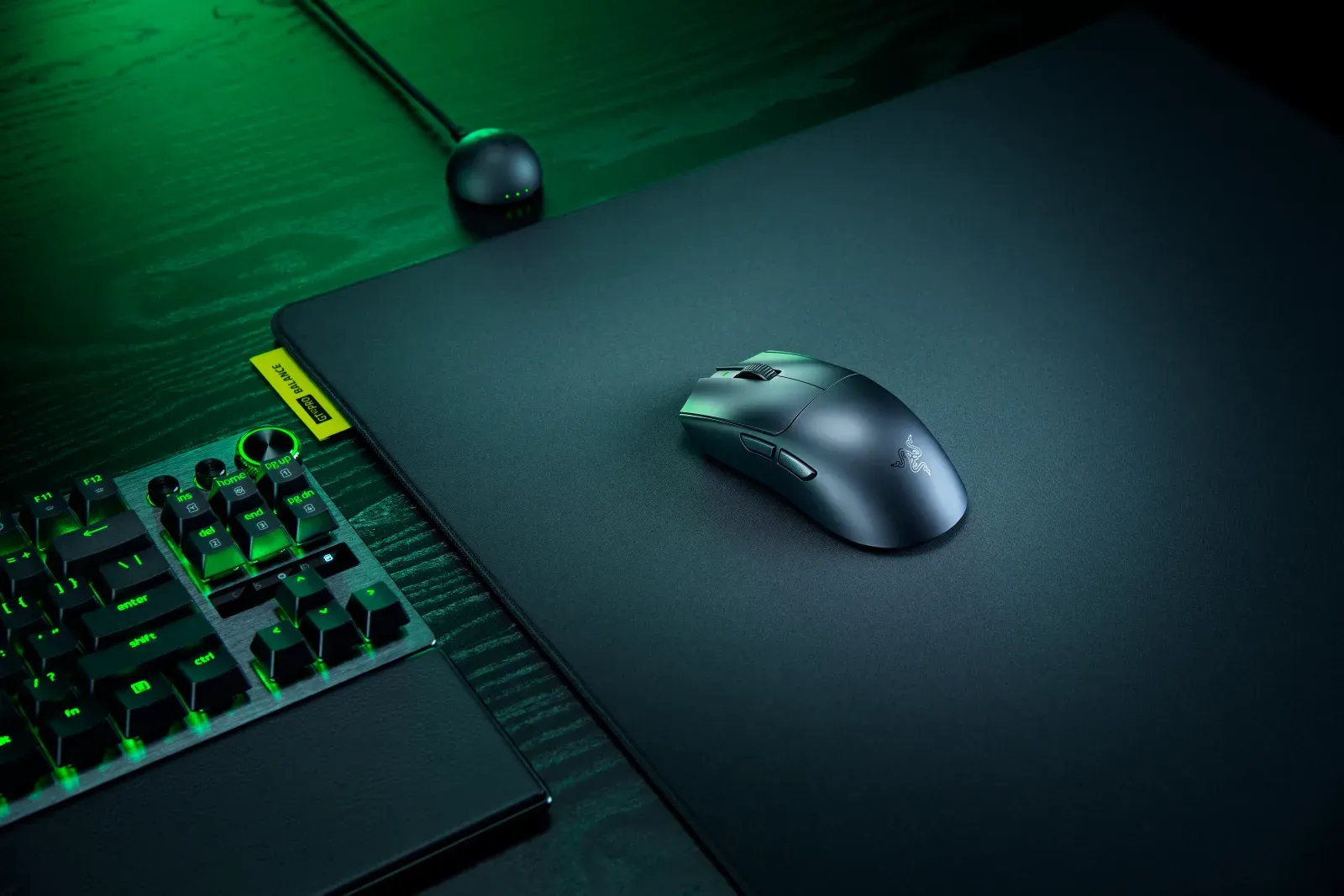 Razer Viper V4 Pro in all its glory / Credit Razer
Viper V3 Pro vs Viper V4 Pro
The most noticeable upgrade is battery life. The V4 Pro is rated at up to 180 hours at 1,000 Hz polling, up from the V3 Pro, and that’s before you factor in the improved wireless efficiency from the new platform.
The second most noticeable change is weight, down roughly 9% versus the V3 Pro. The mouse weighs in at around 49 g in black and 50 g in white. Razer says the reduction comes from shell and PCB optimizations rather than a honeycomb cutout, which suggests it still feels solid and good. Noticeable? I think so.
Highly competitive players will obviously want to go black, given that extra gram in the white version. (Did you catch my sarcasm there?)
The headline number is motion latency: Razer is claiming averages as low as 0.36 ms for motion and 0.204 ms for clicks, which they say makes it around 2.5 times faster in motion latency compared to equivalent wireless mice. That’s a significant claim, and something that is way out of my league for testing.
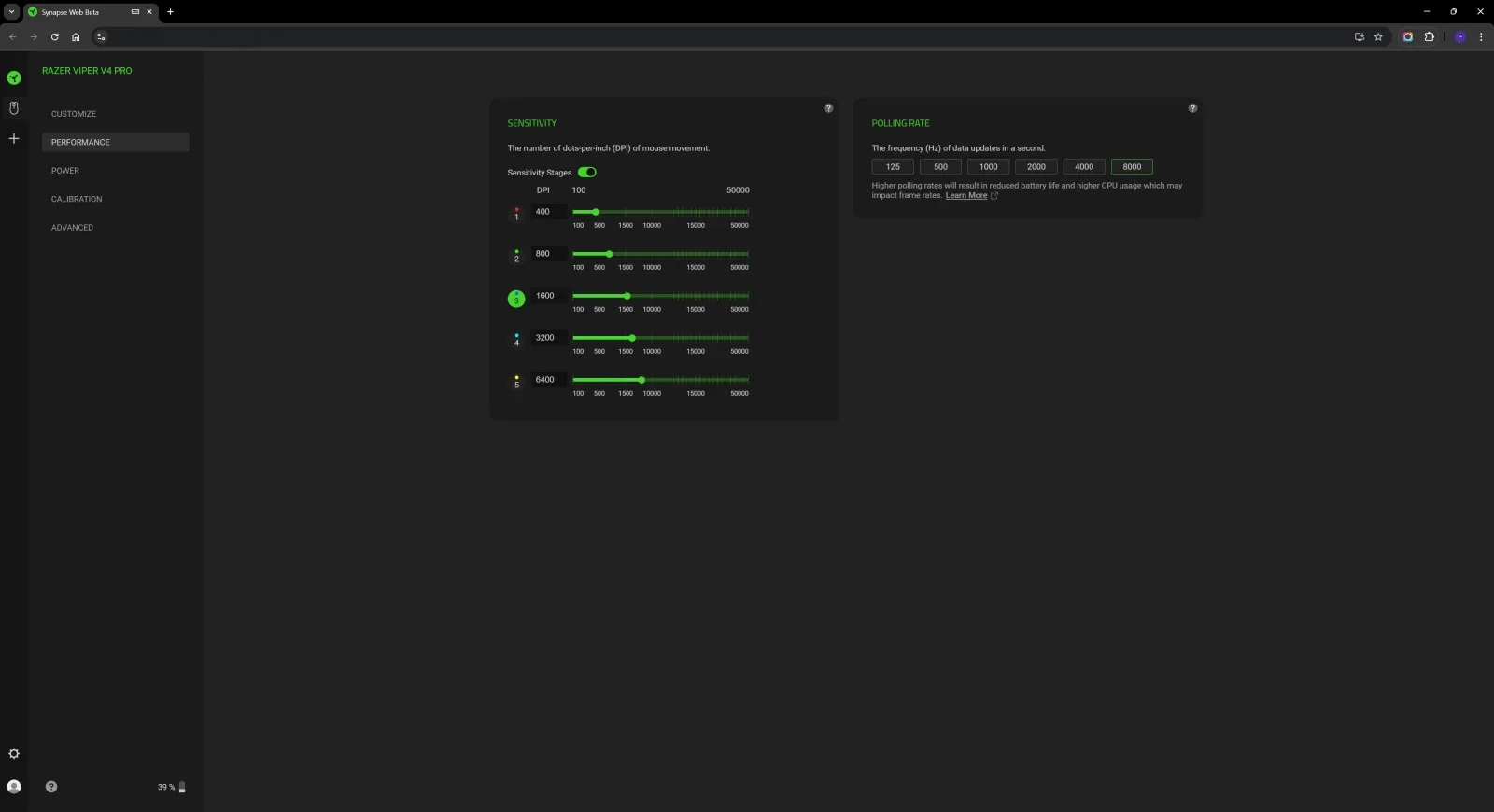
The sensor is a new Focus Pro 50K Gen-3 with a 50,000 DPI ceiling, 930 IPS, and 90 G acceleration with something Razer is calling Frame Sync. Frame Sync aligns the sensor’s scanning cycle with the polling cycle to reduce redundant updates and shave off a bit more latency. True 8,000 Hz polling is supported in both wireless and wired modes, which wasn’t the case with the V3 Pro.
There’s no word on battery life at 8,000 Hz polling rate, but my rough math puts it somewhere around 45 hours, assuming a linear relationship between polling rate and power draw.
The optical switches are fourth generation now, rated for 100 million clicks with zero debounce delay, and the optical scroll wheel is claimed to be 3.3 times more reliable than traditional mechanical designs.
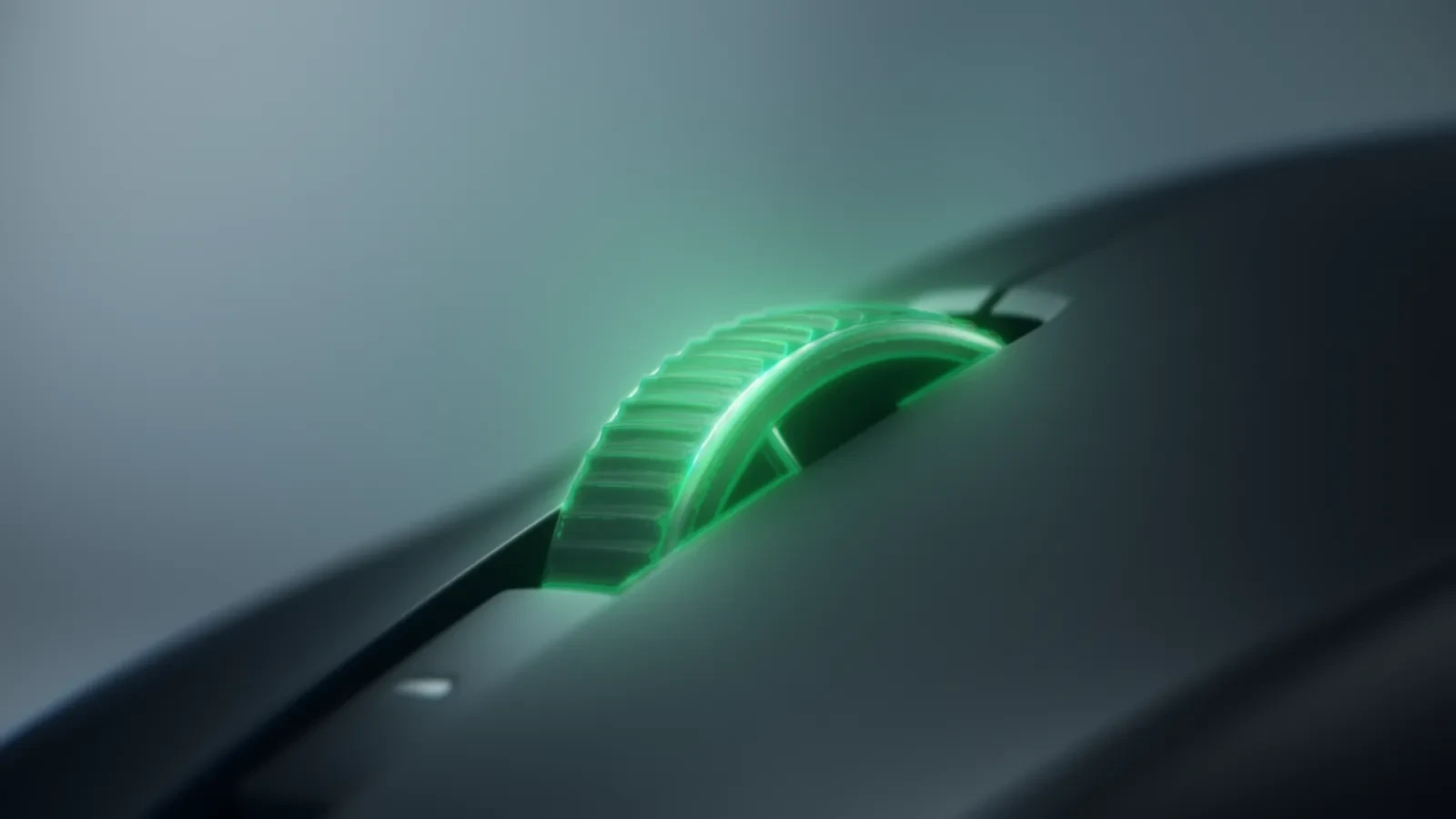
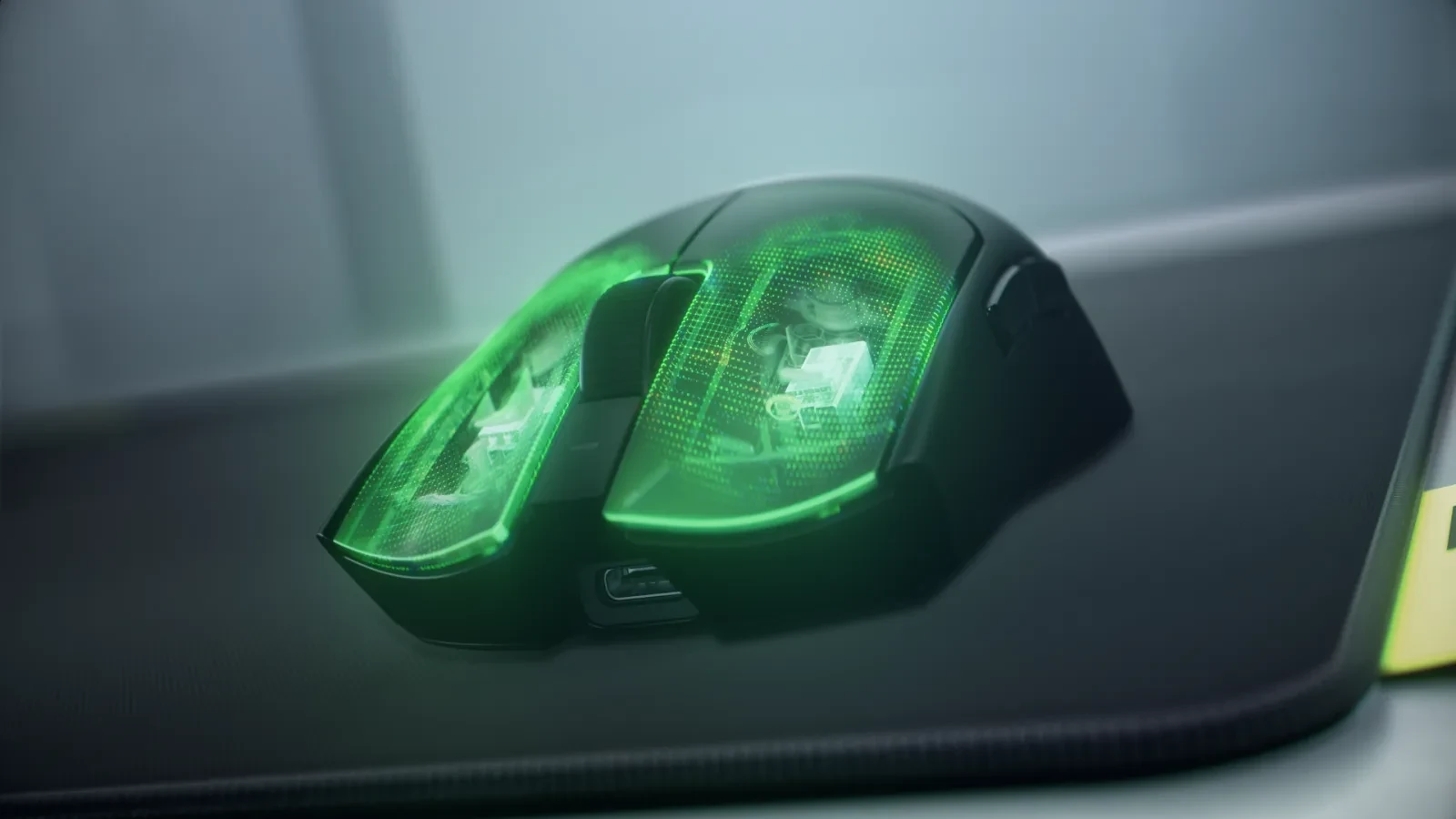
Renders highlighting the new, cool features like scroll wheel and switches. / Credit Razer Press Release
Price and availability
The Viper V4 Pro is priced at $159.99 / €179.99 and is available now from Razer’s website, and shipping fast based on the current stock. Check your local availability.
Checking our Scandinavian suppliers, we only have a “coming soon” from Maxgaming, with a price of 2199 NOK. Exactly the same price as the popular Logitech Pro X 2 Superstrike, also “coming soonish”.
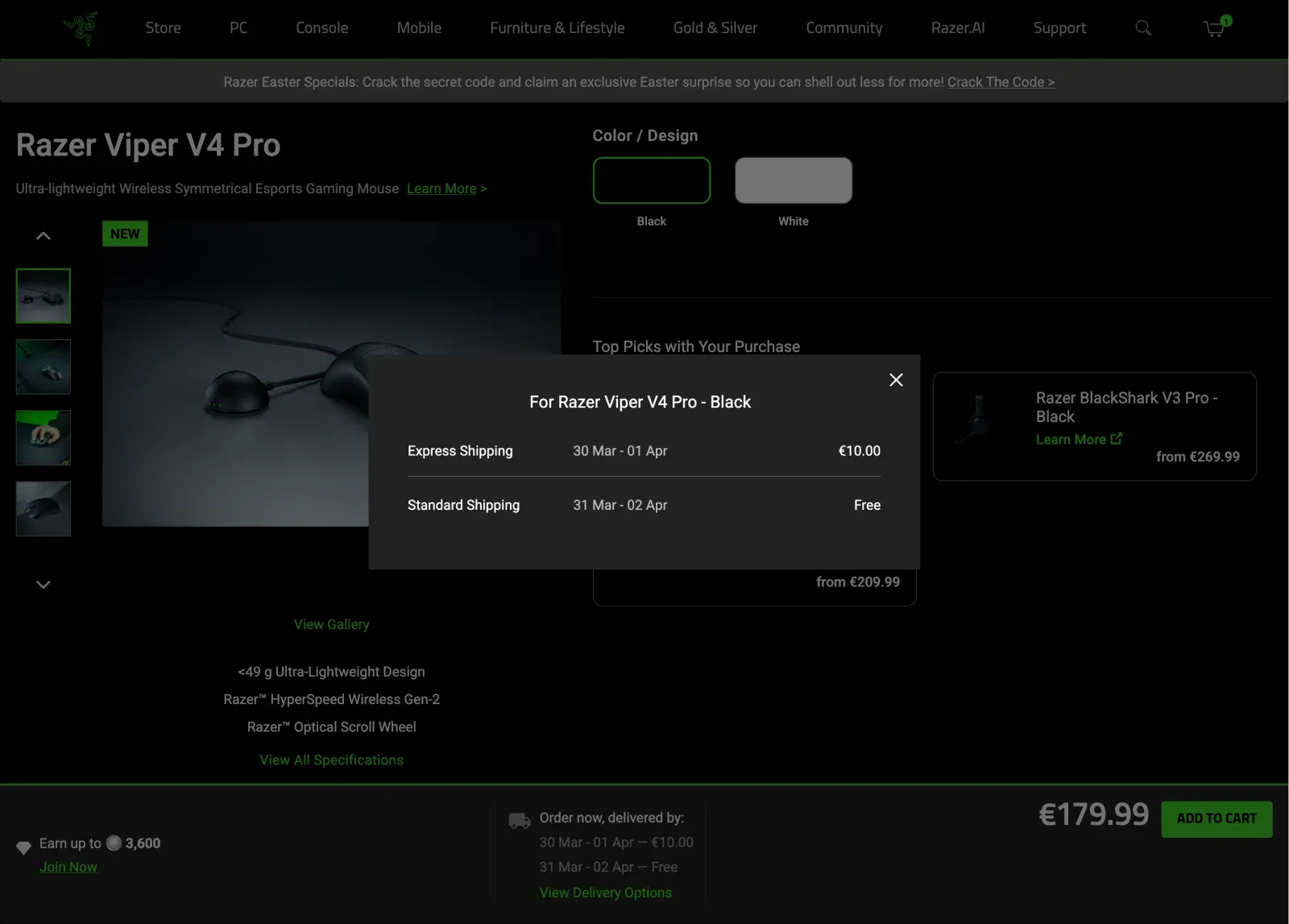 Shipping fast from Razer.com, standard delivery free, arrives 31 Mar – 2 Apr / Credit Razer
Competitive players are in for a treat
According to ProSettings.net, a site that tracks hardware usage across over 2,200 professional players, the top most-used gaming mouse list is firmly split between Razer and Logitech with the Viper V3 Pro at number one. Used by nearly 18% of tracked pros. The Logitech G Pro X Superlight 2 comes in second. The DeathAdder V4 Pro has already climbed to fourth place despite being released less than a year ago.
One flagship mouse that is missing is the Logitech Pro X 2 Superstrike.
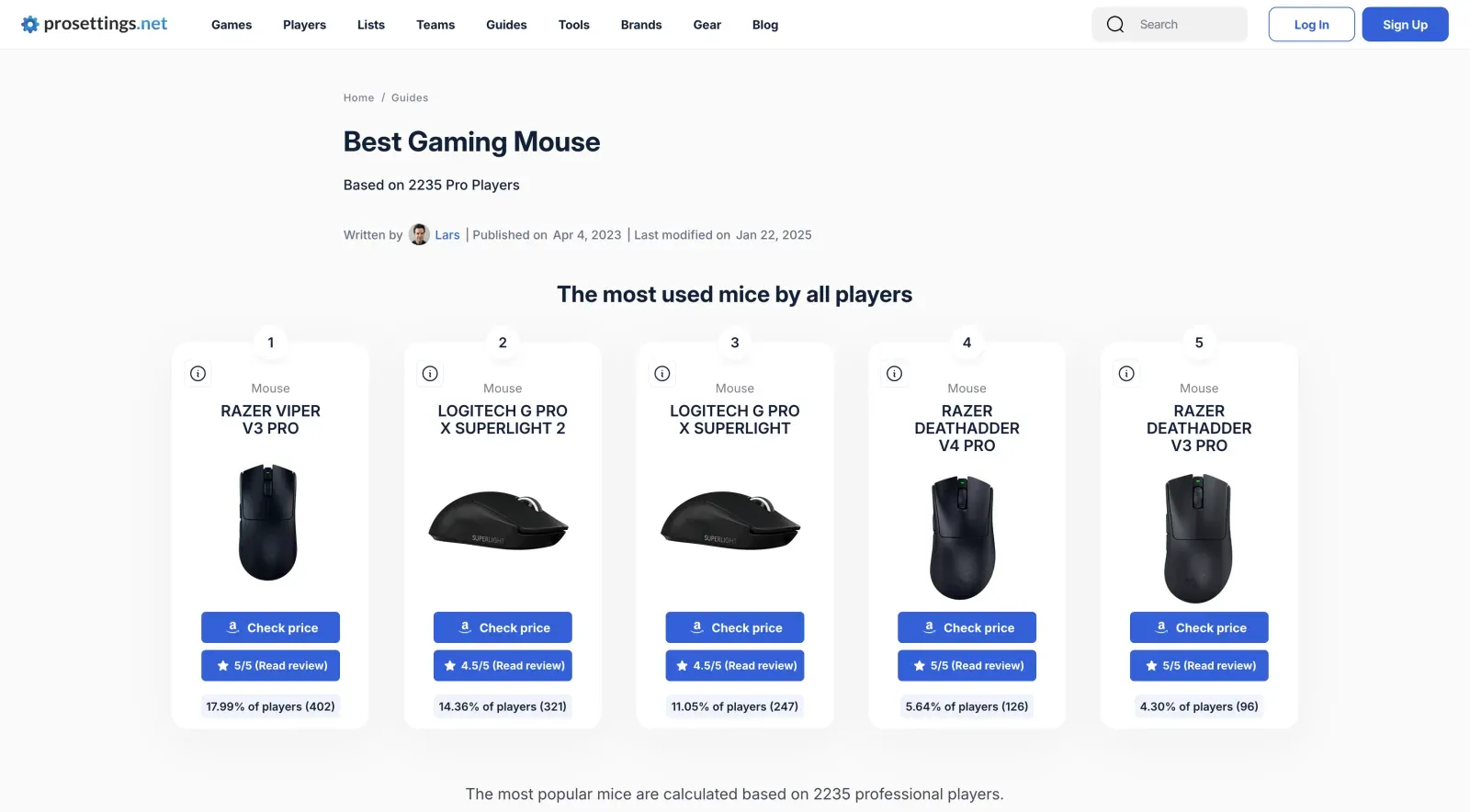 Most used gaming mice among pros, ProSettings.net, March 24th 2026
For players already on the Viper V3 Pro, though, the V4 Pro might be a meaningful step up: nearly 10% lighter, a newer generation sensor with Frame Sync, better battery life, and true 8,000 Hz polling in both wired and wireless modes out of the box without a separate dongle. All depending on your personal needs and eagerness for new hardware though.
 Razer Viper V4 Pro / Credit Razer
… and what about dad gamers?
I’ve said it before, and I’ll say it again. We are well beyond the point where these specs make a meaningful difference for the average player, even the slow dads in their 40s.
The human reaction time for a visual stimulus sits somewhere around 200 to 250 ms, where the best players are around 160 ms.
A click latency of 0.204 ms versus, say, 1 ms is a difference of less than a single millisecond. That gap is so far below the threshold of human perception that I believe it simply cannot translate into better performance for most players.
The people who can actually feel and exploit the difference between 0.204 ms and 1 ms click latency are playing at a level where sponsors pay their bills, drinks, food and even their jerseys, while they are gaming.
For the rest of us, the more relevant question is whether the mouse feels good in your hand, tracks reliably, and doesn’t run out of battery mid-session. On all three of those fronts, the Viper V4 Pro looks very capable.
Viper V4 Pro vs DeathAdder V4 Pro: it’s all about the shape
The honest answer here is that the choice between these two mice comes down almost entirely to shape. The DeathAdder is a classic ergonomic, right-hand-only design, while the Viper is more ambidextrous and suited to claw and fingertip grips.
Otherwise, these two mice are closer than you might expect. Both share the same HyperSpeed Wireless Gen-2 platform, the same Gen-4 optical switches, and the same optical scroll wheel.
They differ a bit in sensor: the Viper V4 Pro gets the new Focus Pro 50K Gen-3 with Frame Sync and a higher spec ceiling, while the DeathAdder V4 Pro runs the Focus Pro 45K Gen-2. Whether that translates to a meaningful difference in actual use is another matter (read my segment about dad gamers above).
Weight is similar, too. The DeathAdder V4 Pro comes in at 56 g in black and 57 g in white, versus 49 g and 50 g for the Viper. That’s a noticeable gap on a spec sheet, but not something most people will feel once they’re actually using the mouse.
Battery life goes the same way: the DeathAdder is rated at 150 hours at 1,000 Hz versus the Viper’s 180, which again isn’t a real-world concern for either.
Buy the one that fits your hand and your wallet. You are not losing any meaningful performance.
Razer mouse configuration finally on the web
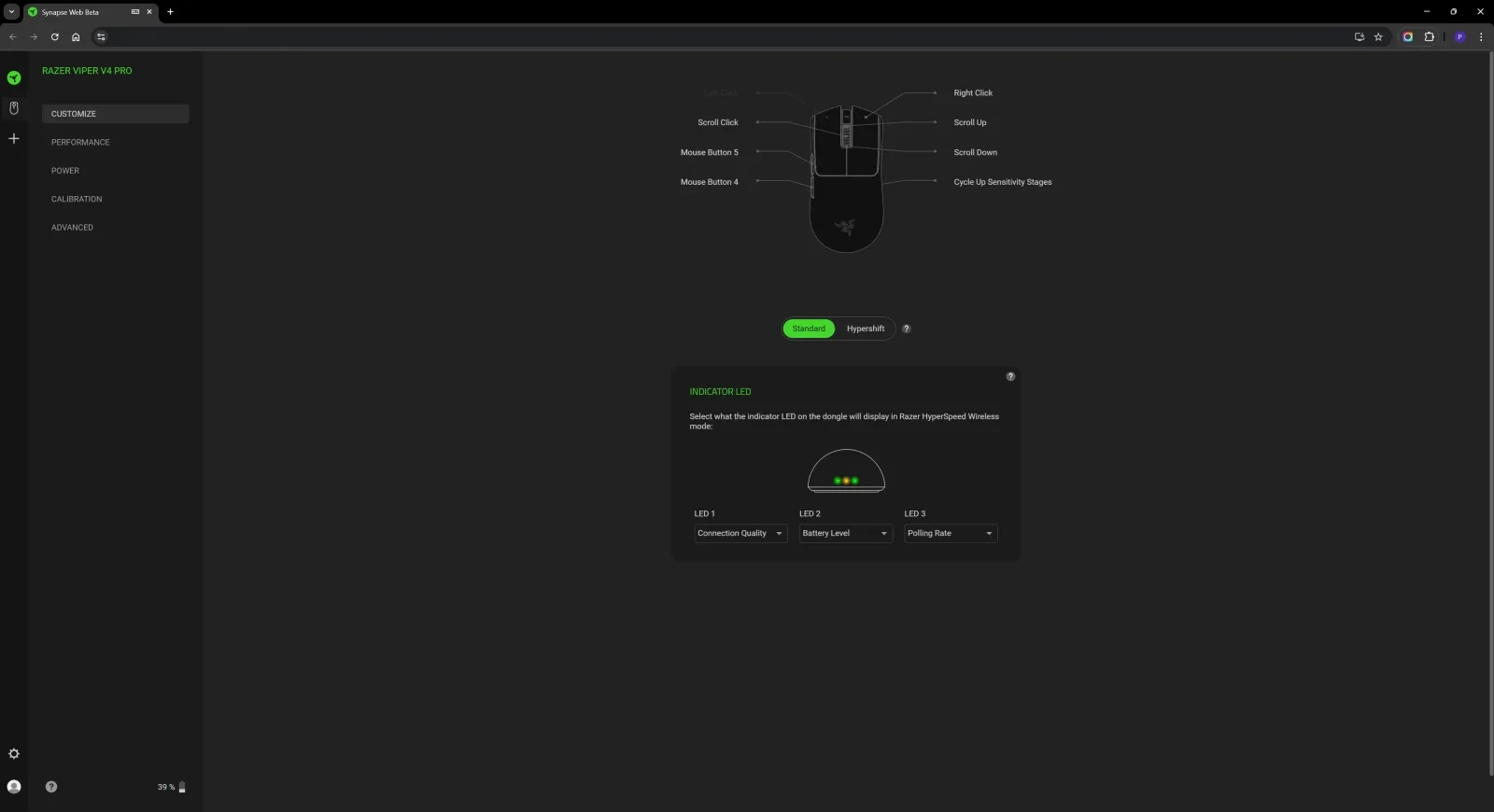
Back at the end of January, we learned that Razer Synapse Web (beta) was coming to the V3 Huntsman keyboards. With the Viper V4 Pro, it looks like mice are now joining the party, now that Synapse Web has left said beta.

The press release describes it as “streamlined, browser-based device tuning without software installation,” which reads as a pretty clear signal that Razer is committed to moving away from requiring a full Synapse desktop install. At least this goes for their leading hardware. It’s a welcome direction, and one that’s been a long time coming.
Conclusion
The vendors keep iterating, bumping up the specs, the speeds and the battery life. But ask yourself, are you in the market for a new mouse? Do you need it? If the answer is yes, you can definitely consider the Viper V4 Pro.
Personally, I have a DeathAdder V4 Pro in my review pipeline that I cannot wait to test come a little after Easter. Stay tuned for more Razer and mice coverage.
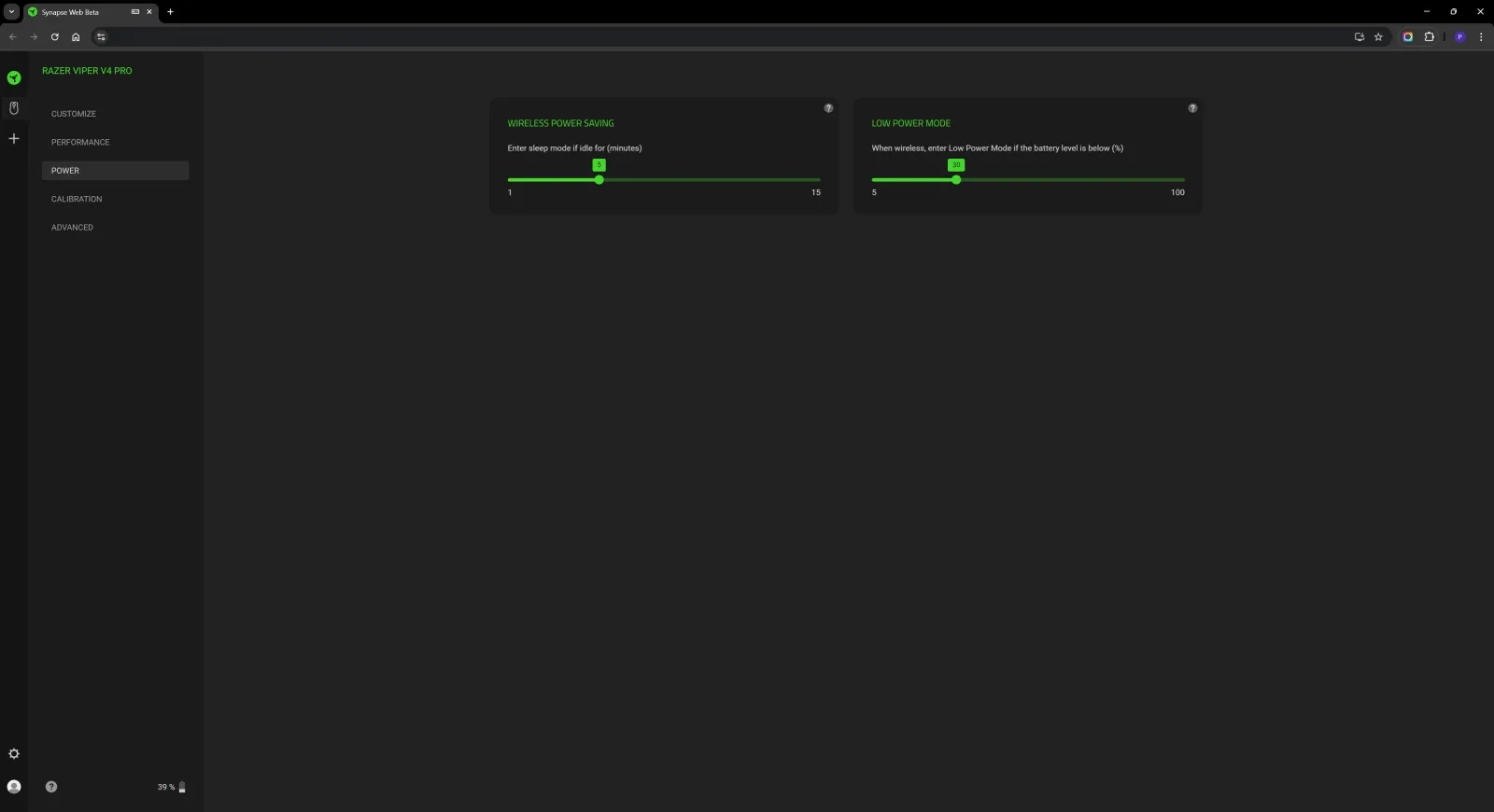
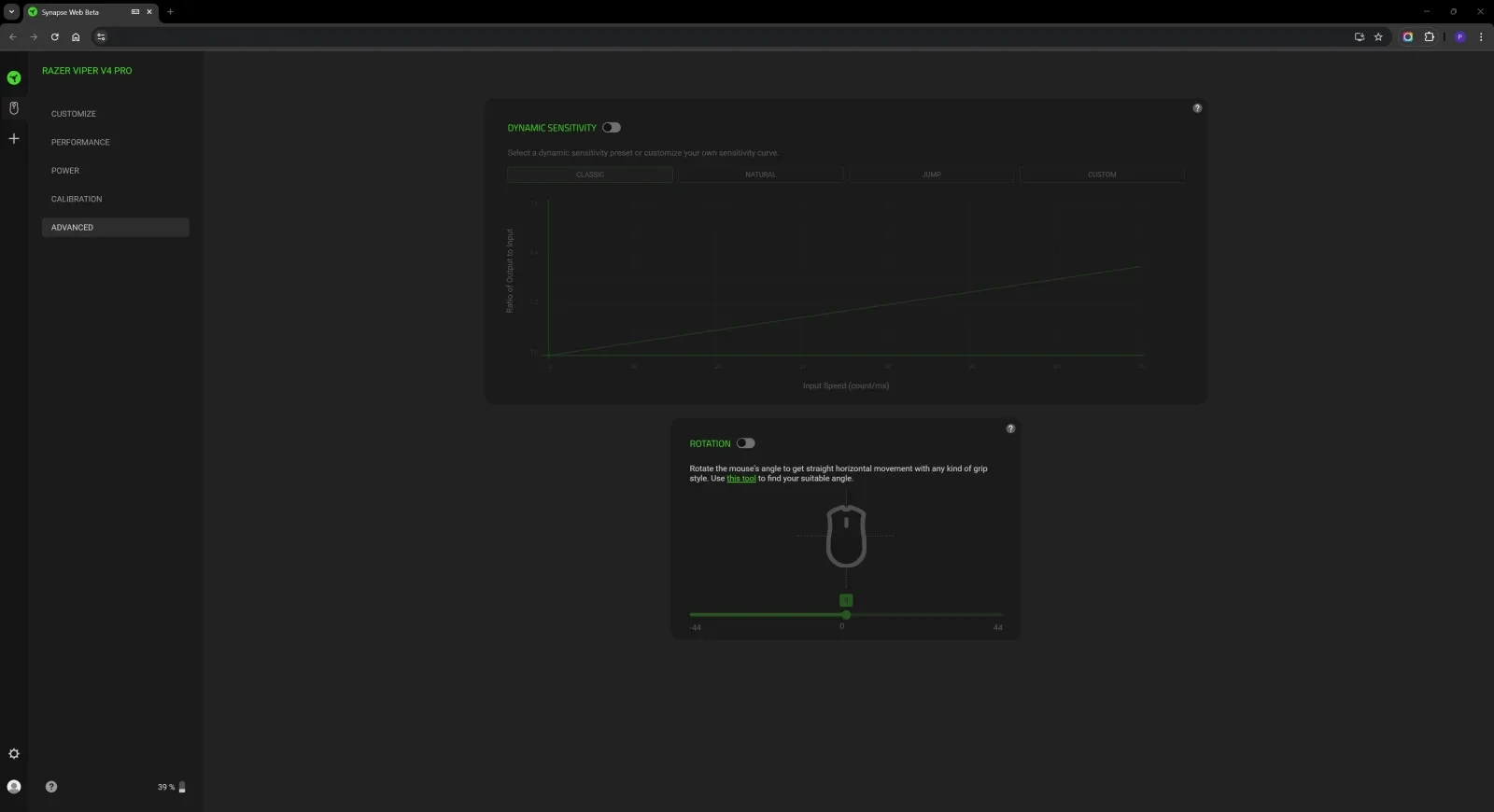
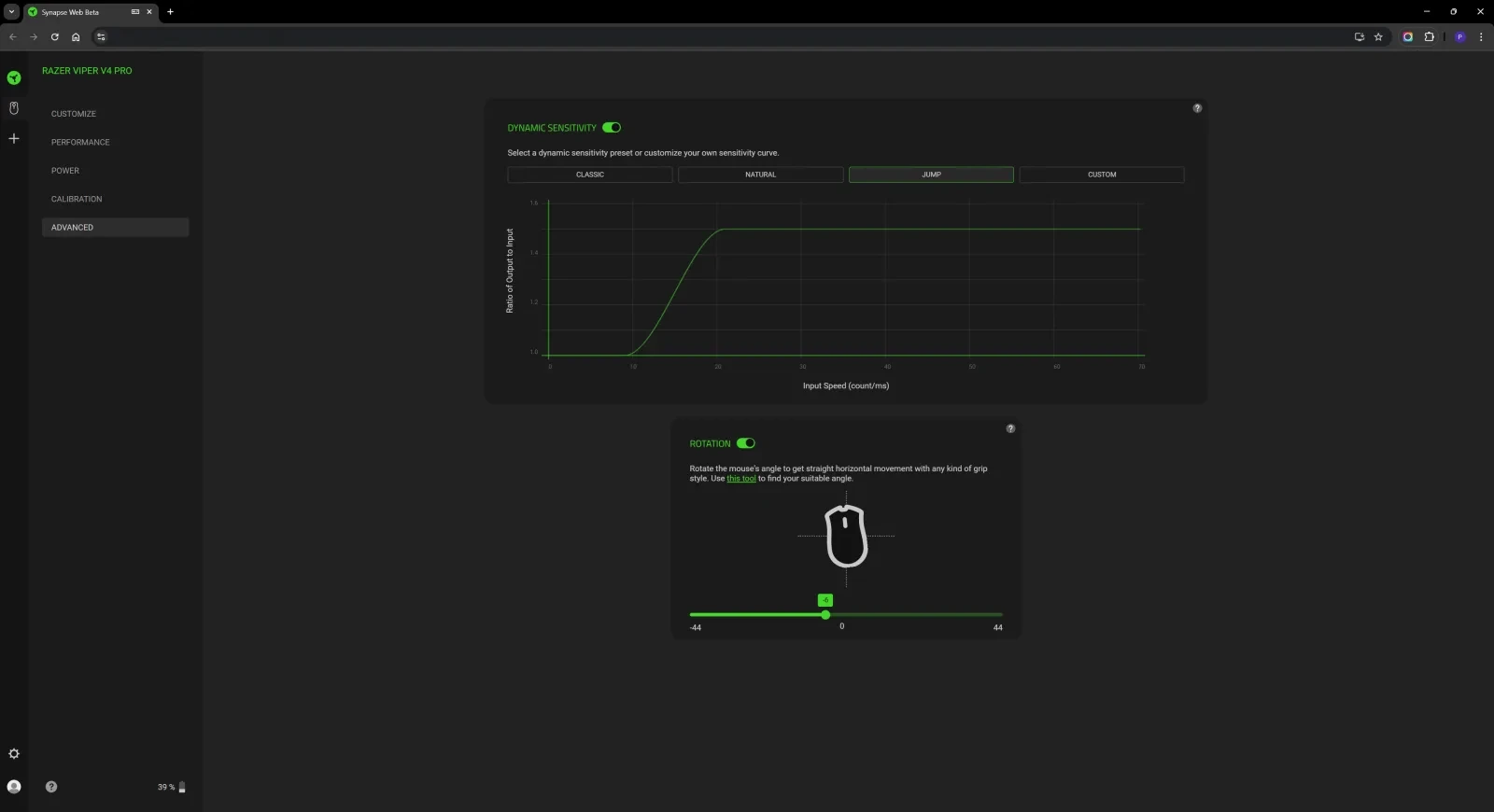
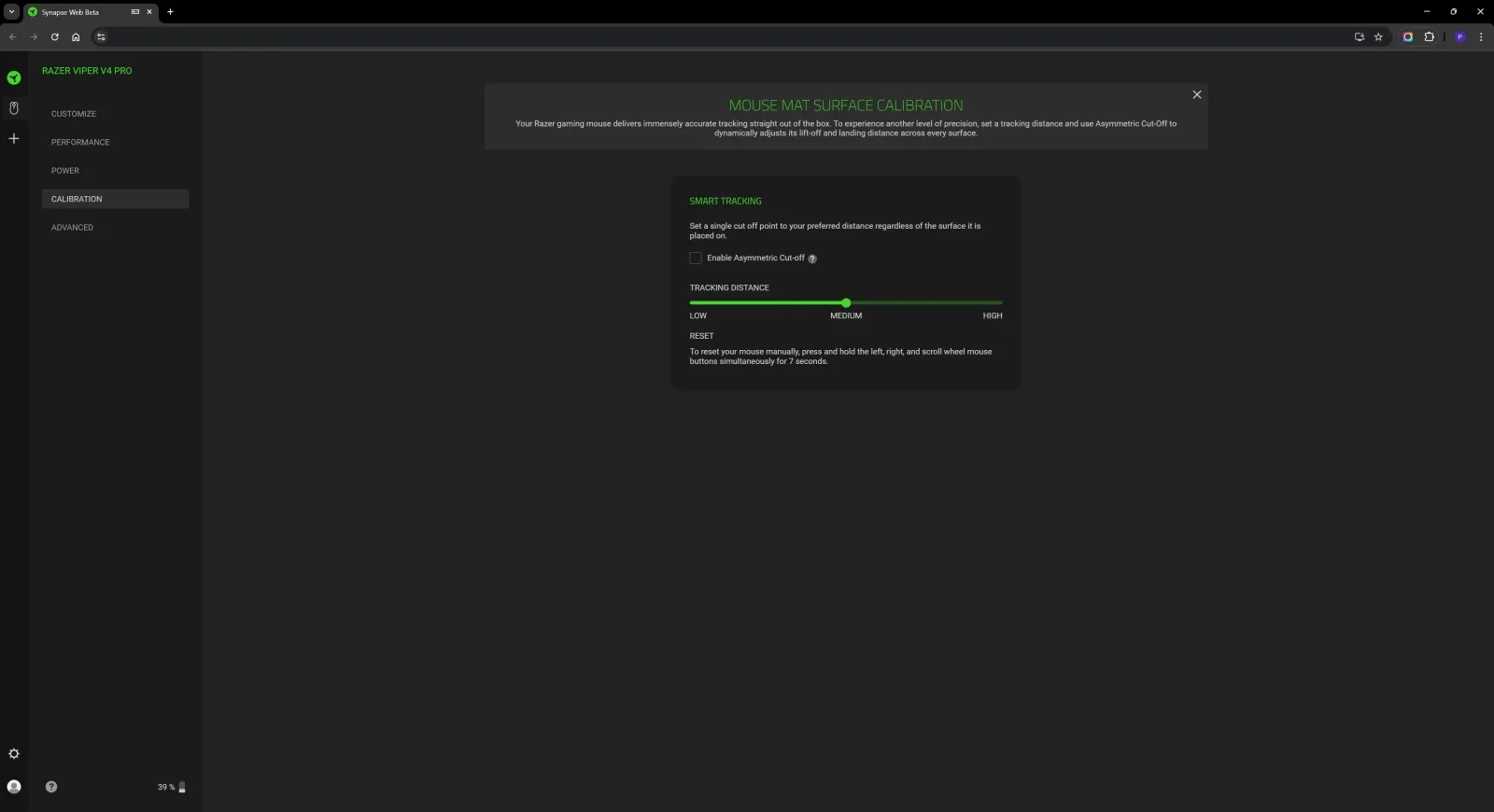
Synapse Web in action
You can calibrate your mouse mat, and set preferred DPI. These are the kinds of features I love.