
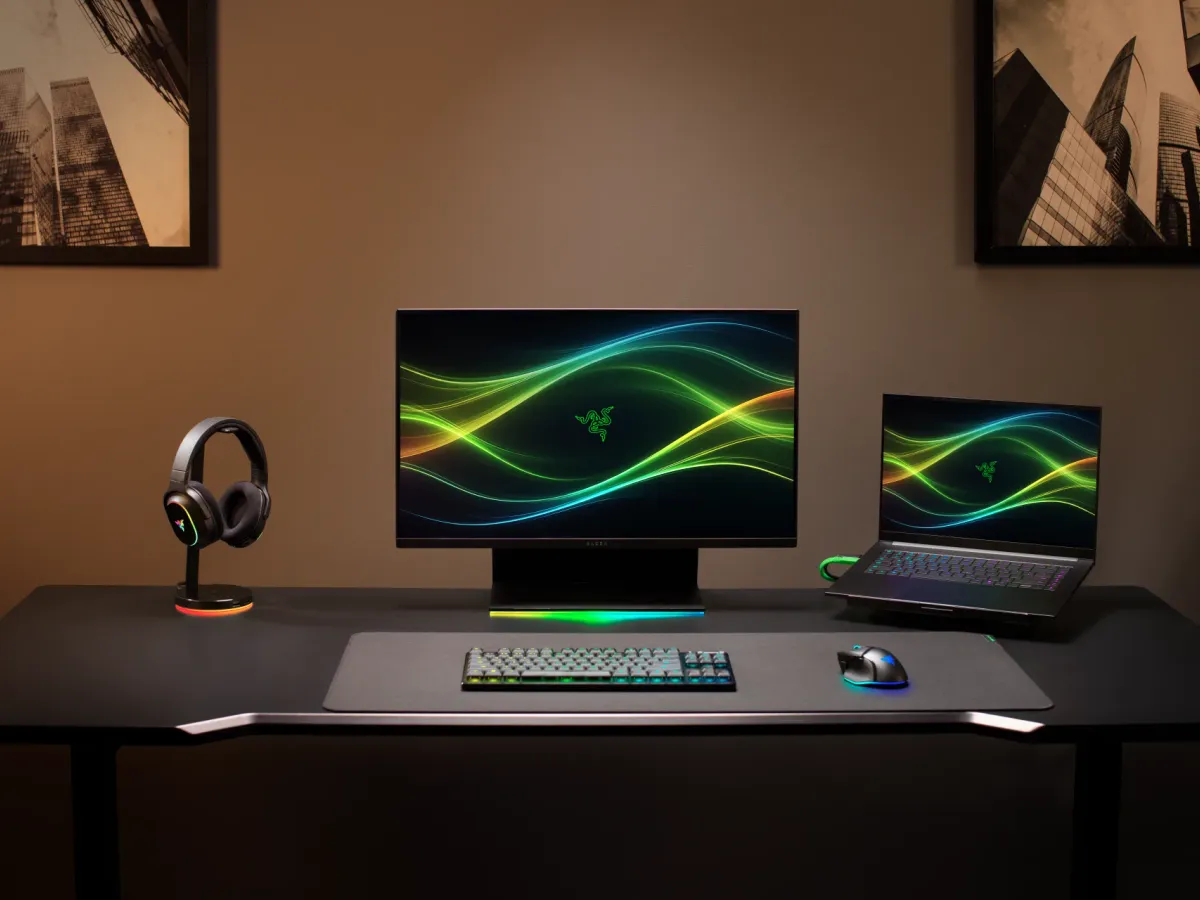
New Razer Blade 16 is released
Razer has announced the 2026 Blade 16, and it’s hard not to get a slight finger itch…
Hear me out, I run my entire life out of a MacBook Pro M1 from 2021. My paying day job, the kaytomas.com side hustle, editing 40 MP raw photos, cutting and editing videos in DaVinci, showing my kids videos of exciting animals on YouTube.
All of my life it runs through one Apple laptop that has never once given me a reason to complain. So I’m not the obvious target audience for a $3,499 Windows gaming laptop.
But the more I look at what Razer has put together here, the more I find myself curious about it. Could I live with this? Would it make my life better being able to play native windows games?
The Blade 16 has ascended from a gaming laptop.
At least, that’s not all it is anymore. I see the Razer Blade as a machine for the prosumer, the creator, the game developer, the motion designer. Those who work, but also play the games they ship.
Someone who needs good hardware, but wants to stay on Windows, and isn’t interested in compromising on the form factor to get there.
What Razer is actually selling here
The 2026 Blade 16 runs Intel’s new Core Ultra 9 386H, which brings 16 cores and a max turbo of 4.9GHz. 33% more cores than last year’s model. Paired with up to 64GB of LPDDR5X memory at 9600MHz and an RTX 50 series GPU built on Nvidia’s Blackwell architecture, the internals are as current as it gets.
The chassis is 14.9mm thin and weighs 2.14kg. It’s CNC-milled from a single block of T6 aluminum, anodized and sandblasted, with a fingerprint-resistant coating. This is not a machine that looks like a gaming laptop. It looks like something you’d bring to a client meeting, which is exactly the point.
 CNC-milled aluminum chassis of the Razer Blade 16 | Credit: Razer
You get Thunderbolt 5 and 4, USB-A ports, Wi-Fi 7, and an SD card reader. This is very solid.
The display is the thing
The screen on the Blade 16 is a 16-inch QHD+ OLED panel at 2560x1600, running at a whooping 240Hz, now 100 nits brighter than the previous generation.
It holds VESA DisplayHDR TrueBlack 1000 certification, meaning true blacks, a 1,000,000:1 contrast ratio, and peak HDR brightness of 1100 nits.
Every unit is Calman Verified with custom color profiles out of the box, and DCI-P3 coverage sits at 100%.
For anyone doing color-critical work, this is important. It’s not just a good gaming screen — it’s a panel you could use for professional editing work without issues.
 240 glorious HZ at 2560x1600. Damn. | Credit: Razer
On battery life
Razer claims up to 13 hours of productivity use and 15 hours of video playback. Those numbers come from internal testing at 45% brightness, with keyboard lighting off and the system in battery saver mode. Real-world figures will be lower.
That said, a meaningful improvement over the 2025 model on battery is genuinely notable for a machine with this GPU inside, and it’s something I’d want to verify properly with a review unit over time.
This is one area where the efficient M-series machines from Apple seem to be ahead.
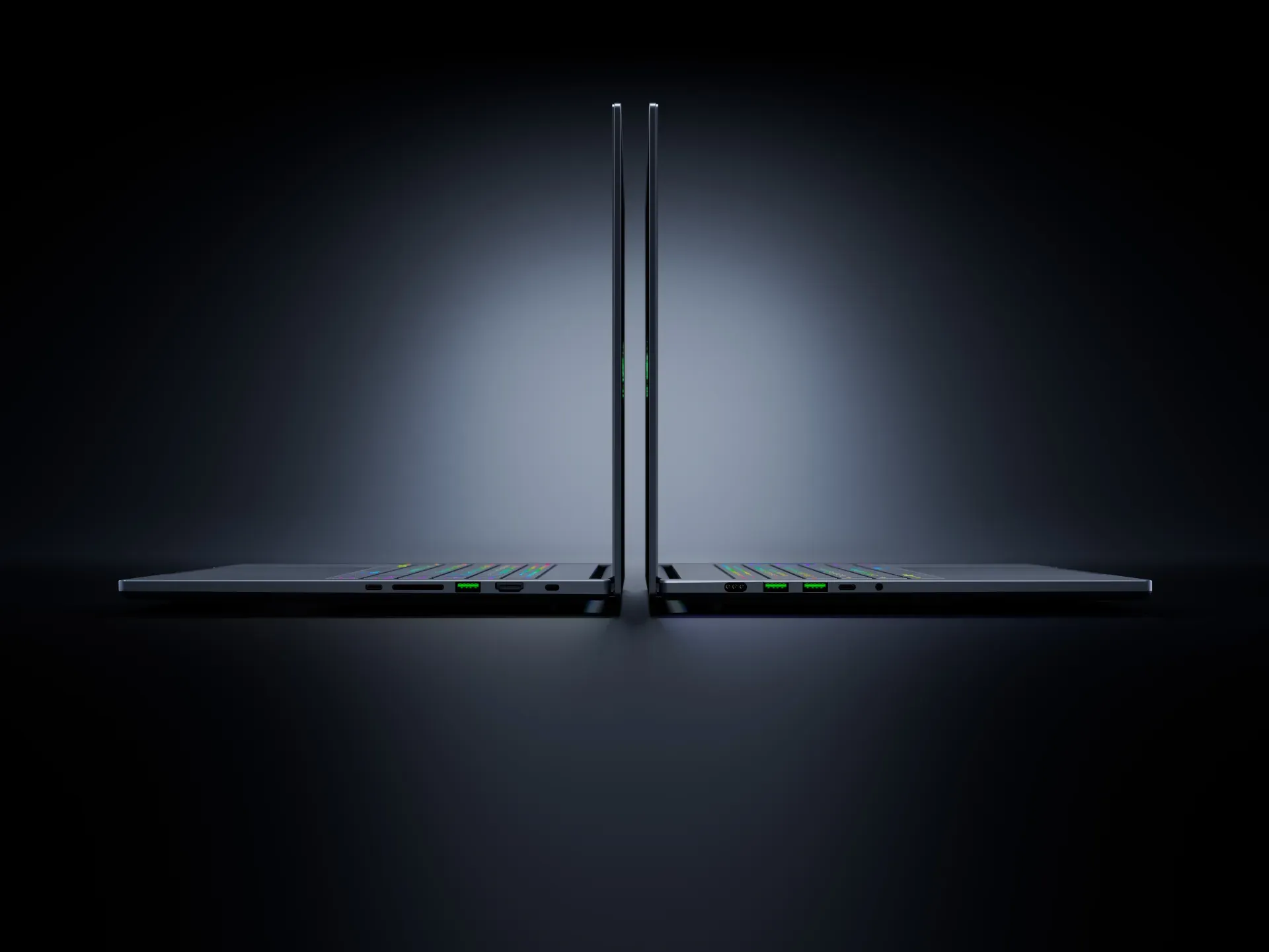 A lot of ports here, and even a magnetic charging cable | Credit: Razer
The price, and who actually buys this
$3,499. €3,599 in Europe. That number closes the door on a lot of people immediately, and it should. This is not a machine you buy casually.
But the price also defines the customer. Many people getting the Blade 16 are probably not spending their own money, or if they are, they’re at a point in their career where a professional tool at this price point is a justifiable business expense. Corporate buyers, studios, freelancers billing customers. People for whom downtime, or a compromised workflow, costs more than the machine itself.
That framing also explains why the Apple comparison keeps coming up. The MacBook Pro M5 Pro is a formidable machine for creative work at a lower price, and Apple’s battery life remains the benchmark everything else is measured against.
But Apple’s ecosystem is closed. You don’t get Windows-native GPU gaming at this level, you don’t get the same flexibility, and for a lot of professional environments, you don’t get a choice. Windows is the platform.
The Blade 16 is the answer for that user, the one who wants the build quality and form factor of a premium machine, and needs to stay in the Windows world.


Razer Blade 16 (2026) display, design, speakers and performance | Credit: Razer
Where I stand
I haven’t tested any Razer blades for a very long time. And the 2026 iteration of the Blade is not in my hands yet.
What I can say is that this is a machine that makes me most curious about running a serious Windows laptop as a daily driver for an extended period of time.
I know Windows well, I’ve used it for years. But I’ve been on Apple silicon long enough now that I genuinely don’t know how a windows laptop like the Blade 16 would feel in daily use. For writing, for photo and video editing, and for gaming.
That’s a question I want to answer properly. I’m planning a deeper look at the Razer Blade lineup later this year, and the 2026 Blade 16 is at the top of that list. When I get time with one, you’ll hear about it.
For now, this is one of the more compelling Windows laptops announced so far this year.
Razer has a clear vision of who this is for, and the hardware backs it up. Whether the prosumer market agrees, and at that price, in this economy — is the part I’m watching.
