
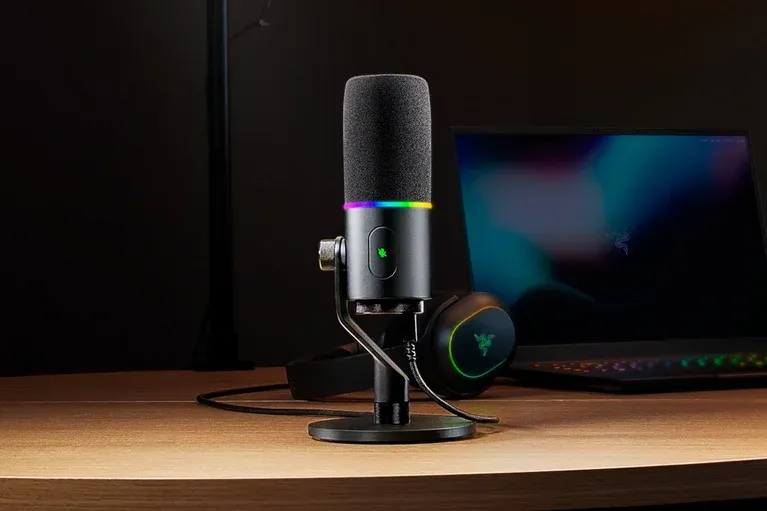
Razer steps into the podcast class
Razer has launched the Seiren V3 Pro, a dynamic streaming microphone with both USB-C and XLR, 32-bit float recording and onboard audio processing. It costs $249.99, or €289.99, and it’s available internationally now.
This is an exciting segment to enter, especially for Razer. A product for people who dabble in podcasting, or who are obsessively concerned with sounding good on Teams and Discord (you know who you are).
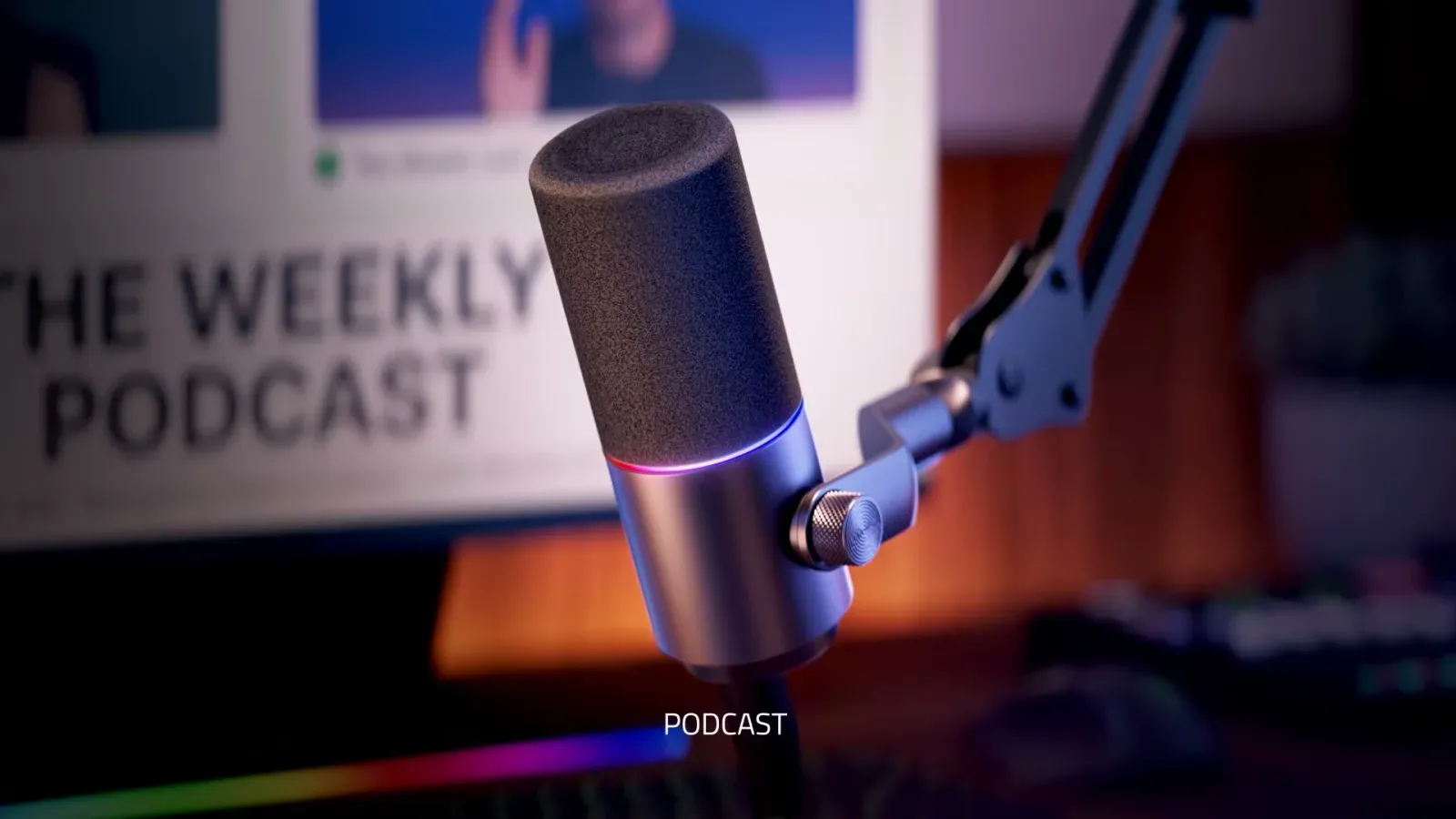 The podcast scenario Razer has in mind. Note the gain dial on the side. | Credit: Razer
There are already plenty of good options to choose from, and the references are well established. The Shure MV7+ is probably the clearest rival, with exactly the same recipe: dynamic capsule, both USB and XLR, and app-driven audio processing, although without 32-bit float.
Rode also makes microphones that just work over USB, with no installed software at all. You lose something without software configuration, you think. Not really, because the software in the middle, Teams, Discord or OBS, usually has this built in already.
Razer’s Seiren series has so far been USB microphones for gamers, while the V3 Pro aims higher, at podcasters, streamers and musicians who want a premium product.
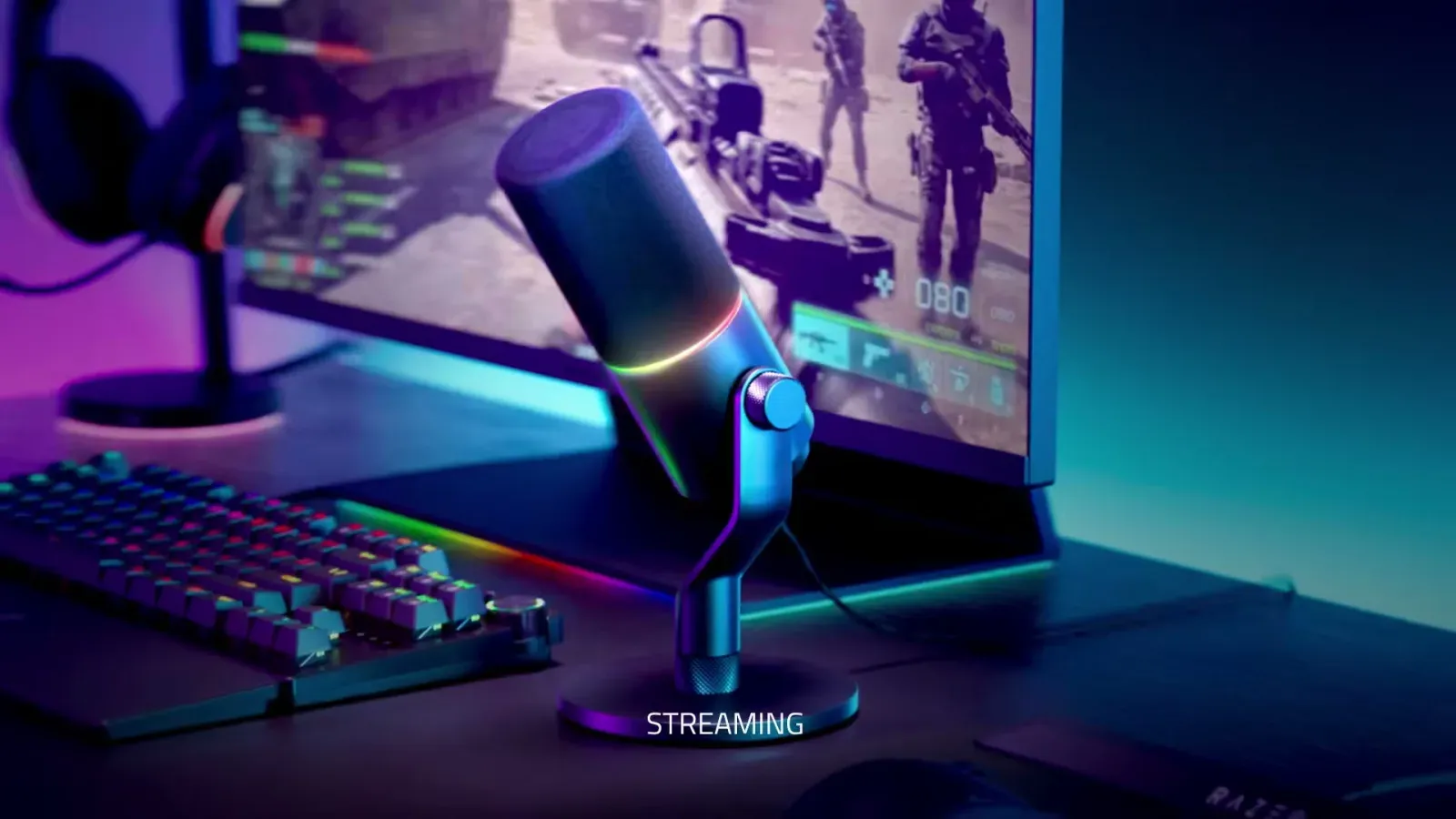 Home turf: streaming at the gaming desk. But the V3 Pro wants more than this. | Credit: Razer
This is the Seiren V3 Pro
The capsule is a 30 mm dynamic cardioid with a stated frequency range of 50 Hz to 16 kHz. A dynamic capsule is the correct choice next to a mechanical keyboard. It’s tuned for your voice, not the room, the fans or the keystrokes.
How well that works in practice simply has to be tested. Taming the hammering of a keyboard is hard for any microphone, especially one standing on the desk.
The audio handling happens on the microphone itself. A built-in DSP runs the AI noise remover, compressor, limiter and expander independently of your computer. On top sits a touch-based mute button with an LED, plus a dedicated gain dial. And for once the Chroma ring is functional: it shows gain level, mute and peak in real time.
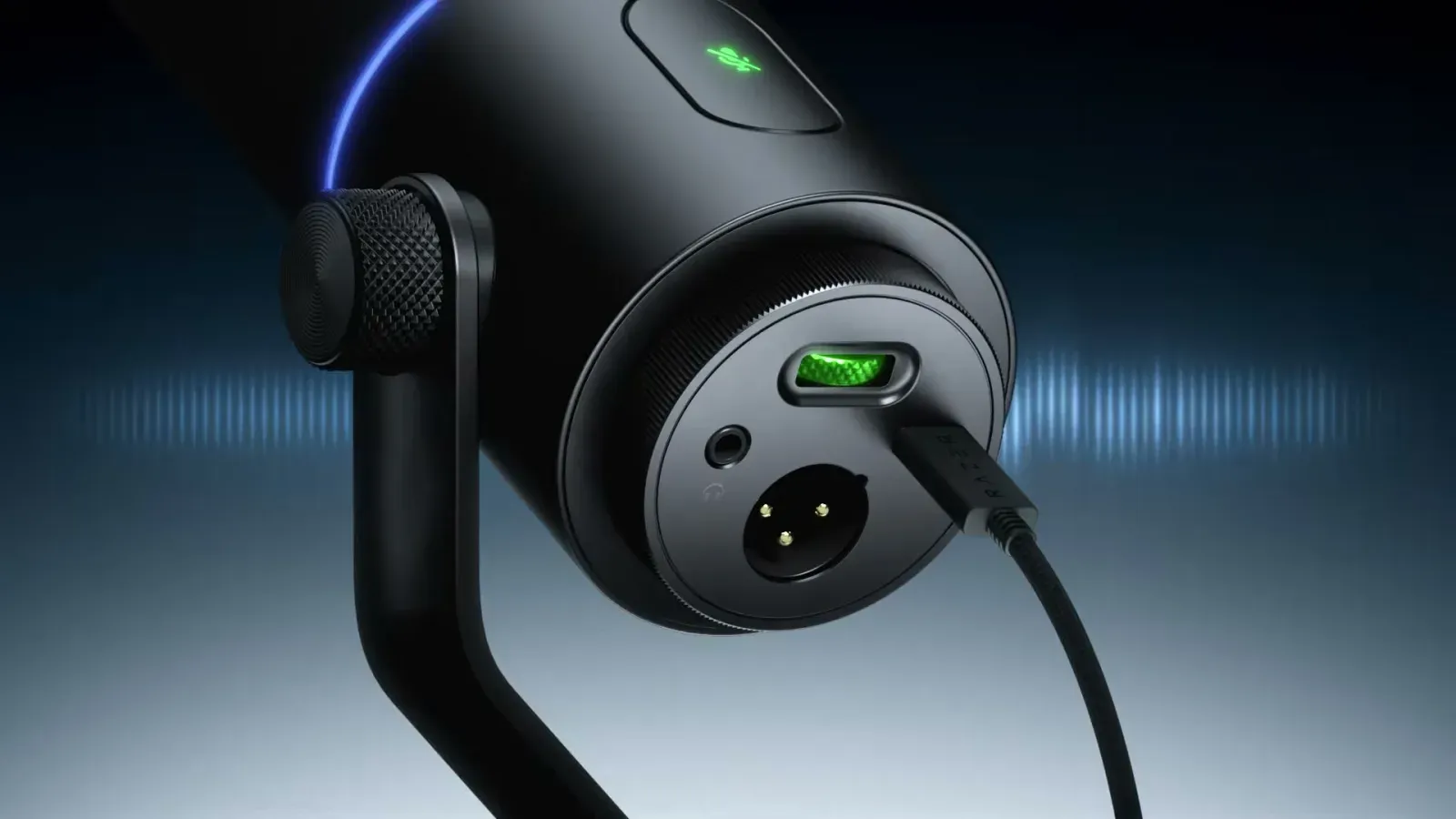 Physical gain adjustment with its own indicator. Very good. You can also see the XLR, USB-C and headphone output here. | Credit: Razer
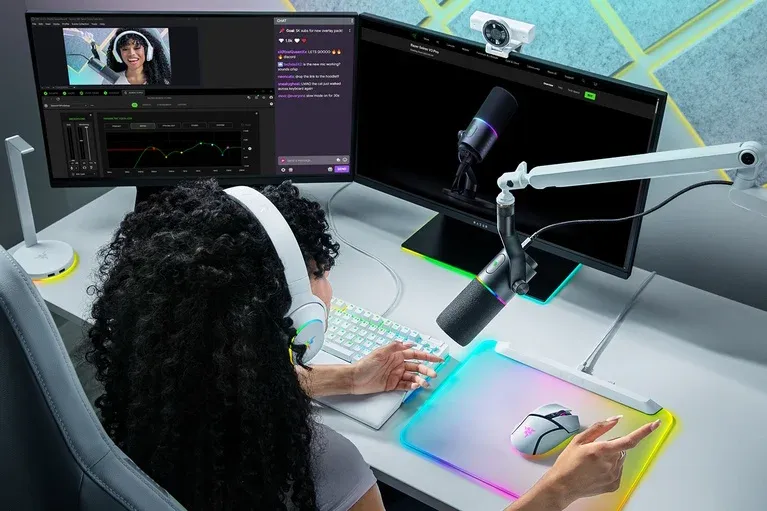 Razer’s dream scenario. Note that a boom arm actually ships in the box. | Credit: Razer
In the box you get a vibration-dampened, adjustable arm mount. Worth noting, because the Shure MV7+ ships with no stand at all. There, the arm is a separate purchase, on top of a price that already sits a notch above Razer’s.
The Seiren V3 Pro is the only microphone in the Seiren line with 32-bit float recording.
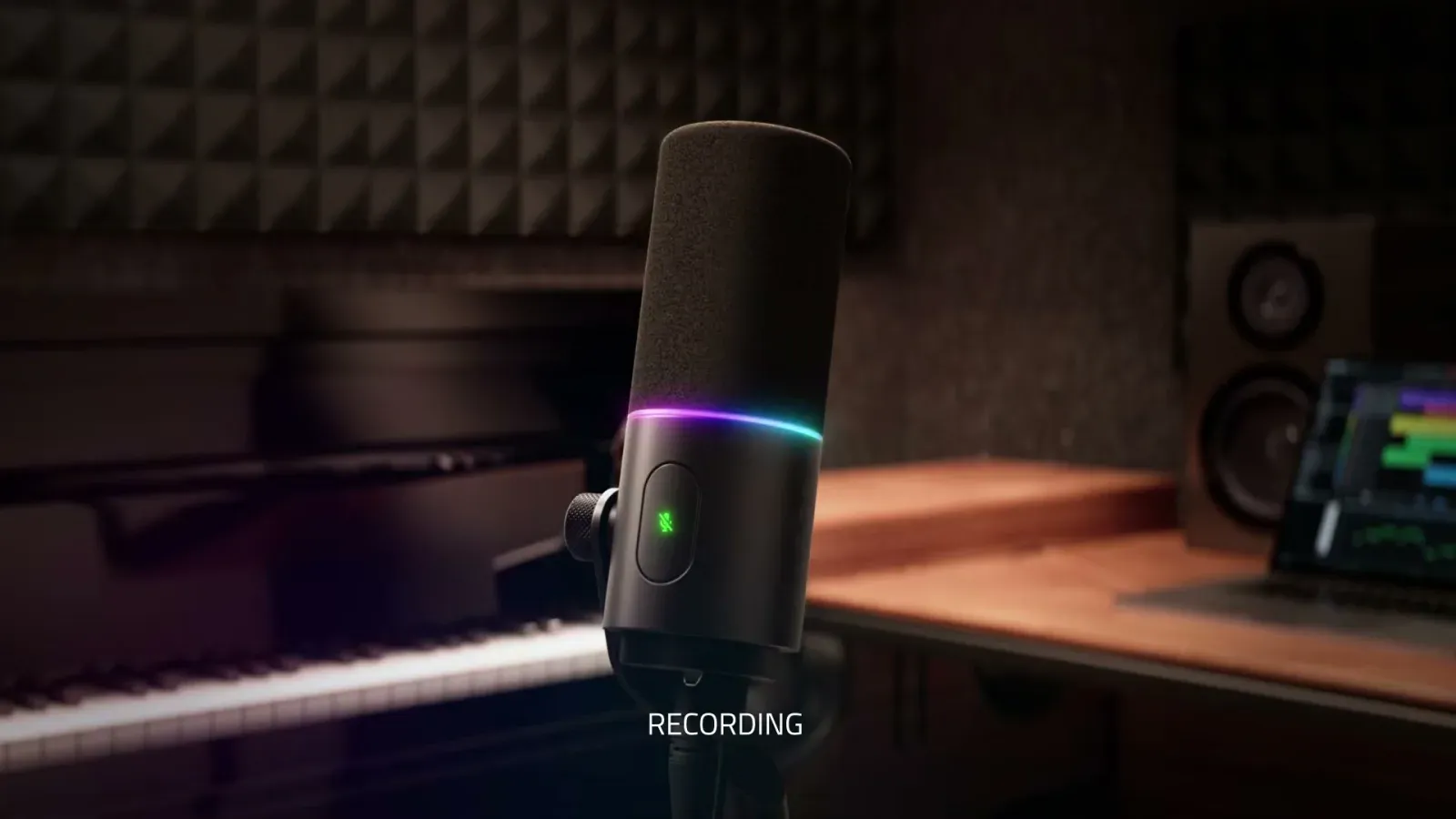 Studio recording is on the menu too. 32-bit float means a sudden loud note won’t clip. | Credit: Razer
How good is it without Synapse?
This is the question I want answered. Over USB-C you get the whole package: 32-bit float, AI noise removal and the rest of the toolbox. But then you’re also routed through one of my nemeses, namely Razer Synapse.
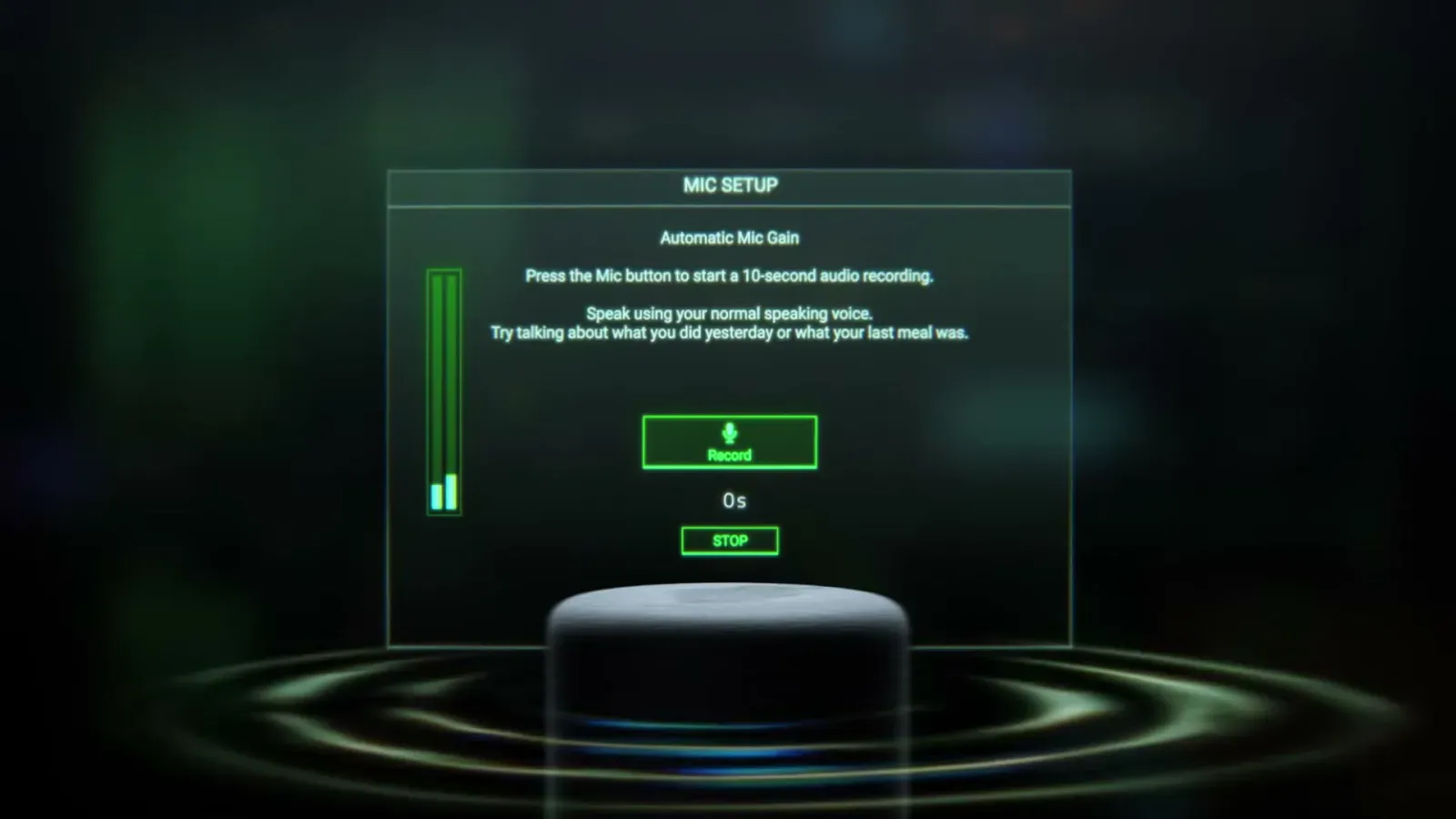 Synapse calibrates gain automatically through a 10-second voice recording. Handy, but it does require Synapse. | Credit: Razer
Use XLR instead, and your audio interface or mixer takes over that job. How the Seiren V3 performs then, and which features survive without the software, Razer says little about for now.
I’m not a fan of software that has to be installed, and maybe least of all Razer’s. Synapse is too sharply tuned for the gamer aesthetic, and it doesn’t help that it lures you toward logins and ever more packages from Razer’s software family. This is a direction I dislike.
Razer makes some good hardware, but I feel it’s often held back by Synapse, and it’s my job to say exactly that.
That said, the hardware itself looks undeniably exciting. We all want better sound, and most of us want it without a separate app just for the microphone.
If the Seiren V3 Pro can deliver over XLR without the Synapse detour, this could become a real alternative to the Shure MV7+. And that? That I want to test.
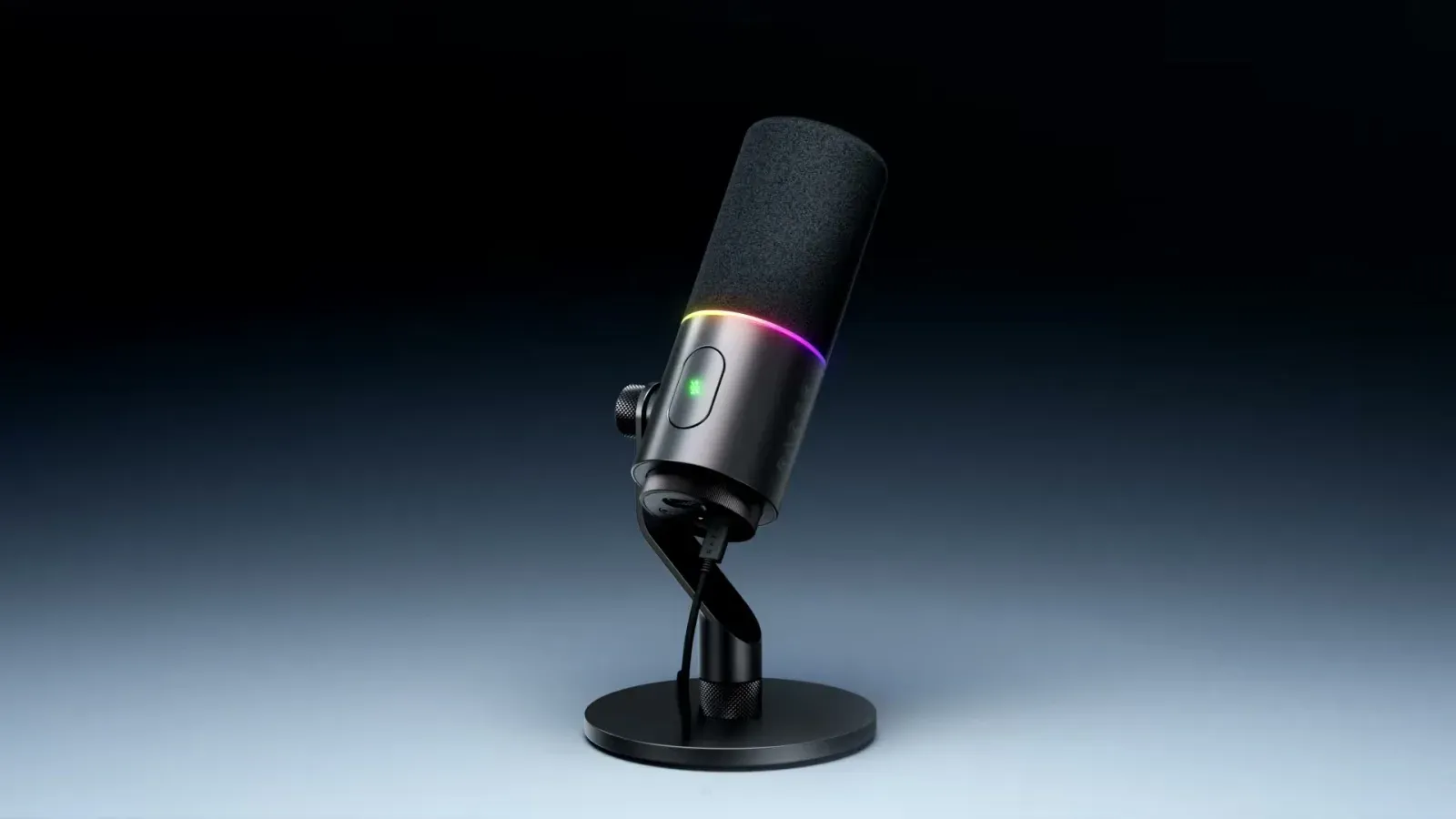 Clean, grown-up design. If it weren’t for the Chroma ring, this could be anyone’s studio microphone. | Credit: Razer
The Seiren V3 Pro is available now at razer.com.
Norwegian pricing is unconfirmed at the time of writing, but loosely estimated by this author at around 3200 NOK.
